
Patrik Gustafsson is IKEA’s Global Home Furnishing and Retail Design Manager, with over 20 years of experience within the company. Swedish by origin, he has shaped home furnishing direction and retail design solutions in more than 30 countries, championing “Democratic Design” and an optimistic approach to everyday life at home—an outlook clearly highlighted during Milan Design Week 2026.
IKEA Career: He began his career in Russia, developing a deep passion for interior design from a young age, inspired by the first IKEA stores in Sweden.
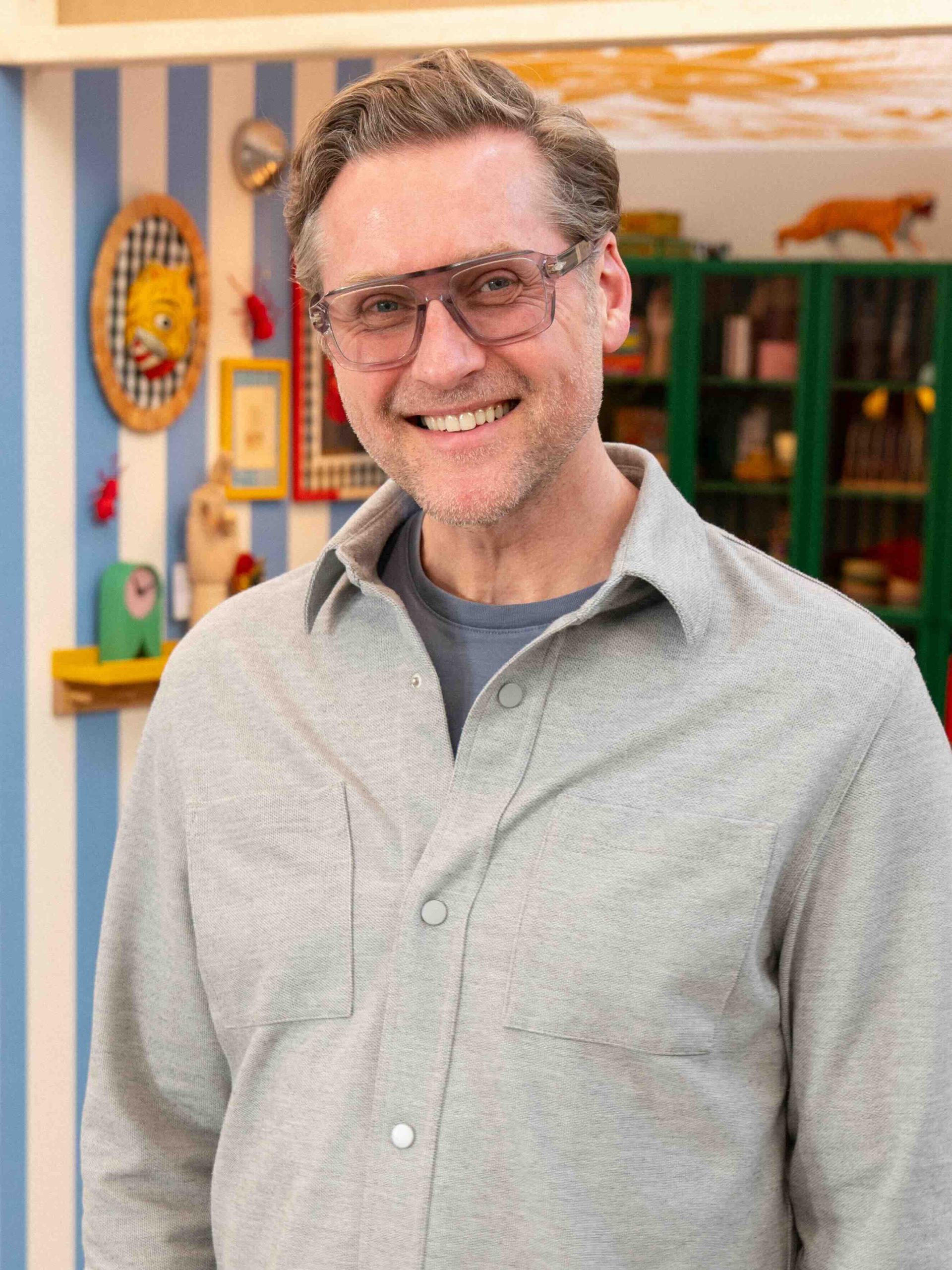
Portrait Patrik Gustafsson
- Concept & Vision
Your work for “Food For Thought” explores the relationship between food and space. How did you translate this concept into your design approach?
To us, it really starts with something very simple: food is one of the most universal ways we experience the home and how we spend time together. It’s not just about cooking or eating, but about pausing, connecting, and sharing moments with others (or with yourself).
With Food For Thought, we wanted to explore how these everyday rituals actually shape the spaces we live in. So instead of starting from objects, we started from behaviours, from real-life situations people recognize. Each room reflects a familiar experience: being alone or together, moving fast or slowing down, being practical or playful. And we tried to translate those into physical environments that people can step into and feel.
In that sense, it’s less about presenting design, and more about creating a moment where visitors can recognize themselves and reflect on their own way of living.
- Everyday Life & Design
IKEA has always focused on everyday living. How did real-life habits and routines influence your contribution to this project?
Every project at IKEA begins with everyday life, not the ideal version of it, but the real one, with all its imperfections. In this case, we focused on food-related routines, because they’re incredibly revealing. Whether it’s eating alone after a long day, cooking for friends, or just grabbing something quickly, these moments say a lot about how people live today.
What we tried to do was to translate those habits into spaces that feel familiar, but also personal and unexpected. Not only in terms of function, but also in how they make you feel. Because ultimately, design is not just about solving problems: it’s about supporting everyday life in a way that feels meaningful, comfortable, and joyful.
- Playful Functionality
The IKEA PS 2026 collection emphasizes “playful functionality.” What does this idea mean to you personally, and how did you interpret it in your design?
To me, playful functionality is about adding a human layer to something useful. A product should always work well; that’s the foundation. But beyond that, it should also invite you to interact with it, to discover something over time, maybe even to smile a little.
Today, when many people experience a certain level of uncertainty or pressure in everyday life, that sense of lightness becomes more important. Playfulness can bring real value to how we experience the home.
With IKEA PS 2026, this idea comes through in objects that are simple and functional, but with a small twist: something that makes you curious, that encourages interaction, and that reveals new qualities the more you engage with it over time.
- Collaboration
This exhibition is built on collaboration between designers and chefs. How did this interdisciplinary exchange influence your creative process?
What made this project especially interesting was the dialogue between different disciplines. Working with chefs means stepping into a world that is very sensory and very immediate. It’s about taste, timing, memory, emotion. That naturally influences how you start thinking about space.
At the same time, design brings structure and context to the experience. So, it became a true exchange, where food influenced the way we shaped the environment, and the environment influenced how the food was experienced – which is exactly what happens in everyday life, even if we don’t always notice it.
This kind of collaboration allows you to move beyond your usual way of thinking and create something more complete, where different elements come together into a single, coherent experience.
- Career Challenge
What has been the biggest challenge in your career so far, and how has it shaped you as a interior designer?
One of the biggest challenges is also biggest inspiration and it’s to understand and stay close to real everyday life while working on a global scale. To me, it’s always been important to stay grounded in how people live, with all the complexity and imperfections that come with it. That challenge has really shaped the way we approach interior design today. It’s not about creating something ideal, but something that feels relevant and meaningful in everyday life. It is also super inspiring to see all the communalities across countries and cultures in a world that is becoming more and more polarized.