
Andrea Crespi is an Italian artist working across both physical and digital media, whose work involves the continuous exploration of various forms and themes, including optical illusion, social transformation, and the digital revolution.
Through his art, he embodies contemporary cultural changes. Crespi’s research views art as a tool for perceiving and analyzing truth, often manifesting in intimate and personal portrayals of beauty. Today, Andrea Crespi is considered one of the most influential Italian artists, both nationally and internationally.
His ongoing research, conducted from Milan and Miami, evolves daily, with a particular focus on issues that deeply impact society. He is an artist who truly reflects our time, utilizing media spanning from physical to digital, expressing daily life with careful precision. He successfully blends the physical and digital realms through a uniquely personal stylistic signature. His works have been exhibited in prestigious museums both in Italy and internationally, including the Triennale Museum in Milan, the CAFA Art Museum in Beijing, Times Square in New York, and Art Dubai.
Andrea Crespi has forged significant artistic collaborations with renowned companies such as Bvlgari, Adidas, American Express, Cupra, Ducati, Redbull, and others in the fashion, automotive, and lifestyle sectors. Andrea Crespi’s artistic research focuses on “Neosynthesis,” a minimalist approach that balances past and future, tradition and avant-garde. In a world overloaded with images and information, this concept distills complexity into simple forms, engaging viewers both immediately and deeply.
“Neosynthesis” addresses 21st-century challenges by reinterpreting iconic past elements to give them
new present meanings. It creates dialogues between history and avant-garde, transforming tradition through contemporary lenses. The reduction to essentials, guided by the principle of “less is more,” results in clear, meaningful works that invite deep reflection.
Technology plays a crucial role as a creative extension, with AI, augmented reality, and digital tools expanding artistic possibilities and interaction. Crespi’s symbols are simple but powerful, fostering intercultural dialogue and emotional connections, addressing globalization while celebrating cultural identities. His collaborations with brands extend the reach of his art without losing its integrity, bringing it beyond traditional spaces. Ultimately, “Neosynthesis” emphasizes art’s role in conveying depth and universal communication, blending memory, innovation, and technology for a lasting impact.
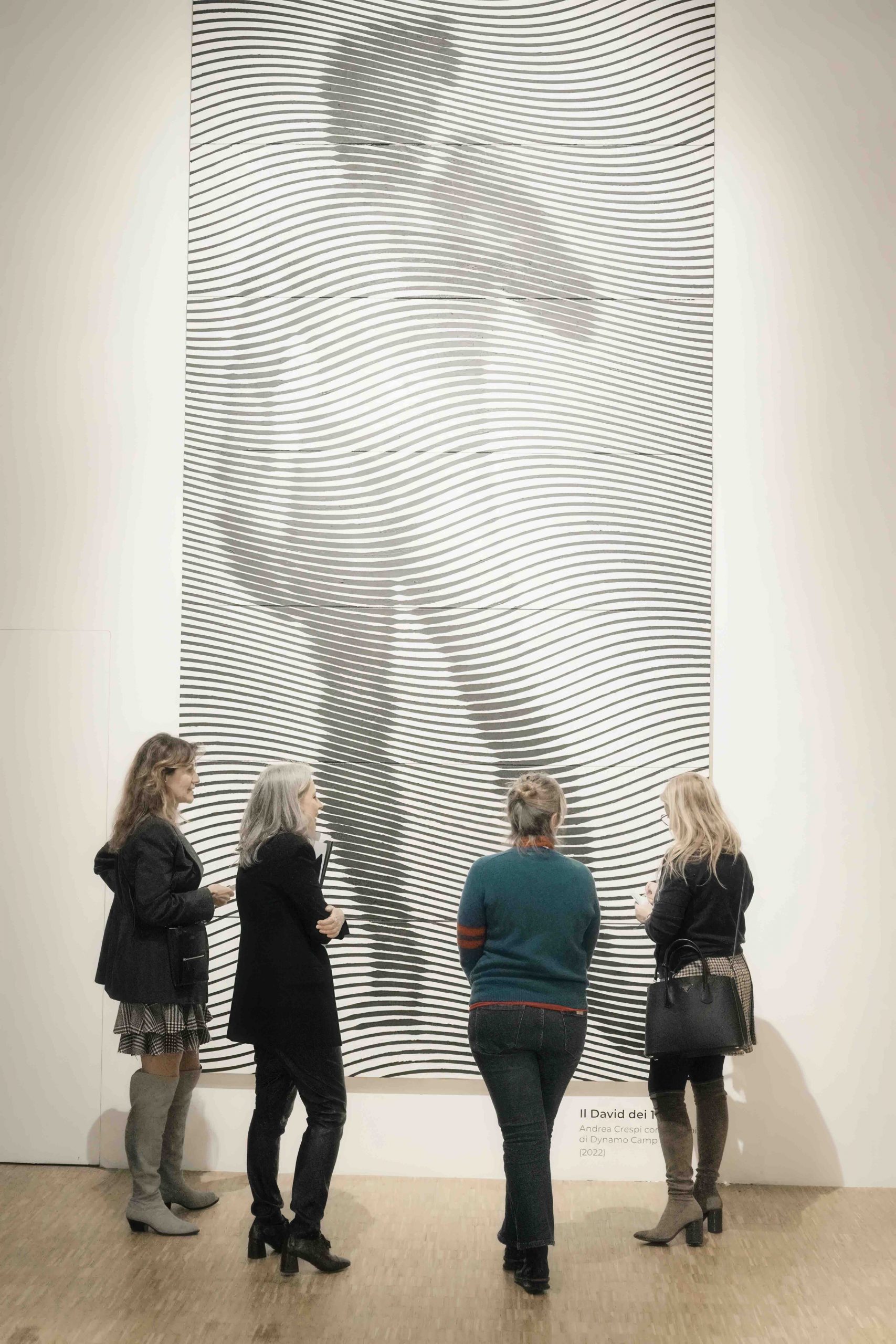
Giulia Selvaggia Virgara triennale
What are the biggest challenges you have met in your career?
Without a doubt, one of the biggest challenges at the beginning was finding a language that could truly represent me. Building a unique and distinctive style through experimentation and research, something that would reflect my personal imagery, was a long and complex process. Finding my own artistic voice was a major step. Another great challenge was believing in this path more than anyone else did, especially when I had nothing to show yet and was starting from scratch. It’s difficult to gain attention and carve out space in the market when no one knows who you are. But with perseverance, commitment, determination, and of course a good dose of creativity, I managed to turn those difficulties into opportunities for growth.
How was your passion for art born?
Like many artists, I believe my passion for art was born along the way, in the process of discovering who I am. There were artists, works, and moments that moved and inspired me deeply. Early on, I was fascinated by Banksy, this mysterious, almost superhero-like figure with no identity who could communicate powerful messages through such simple yet striking imagery. His coherence and strong visual language deeply influenced me. Over time, I let myself be inspired by other figures, expanding my references until I found my own identity and began tracing my own path. Maybe, at its core, my passion for art also came from a sense of not fitting in elsewhere. I never had a strong inclination for sports or music, and I often felt out of place in those worlds. Art, or rather, creativity, was the one thing that came naturally to me. It became the starting point for finding my way.
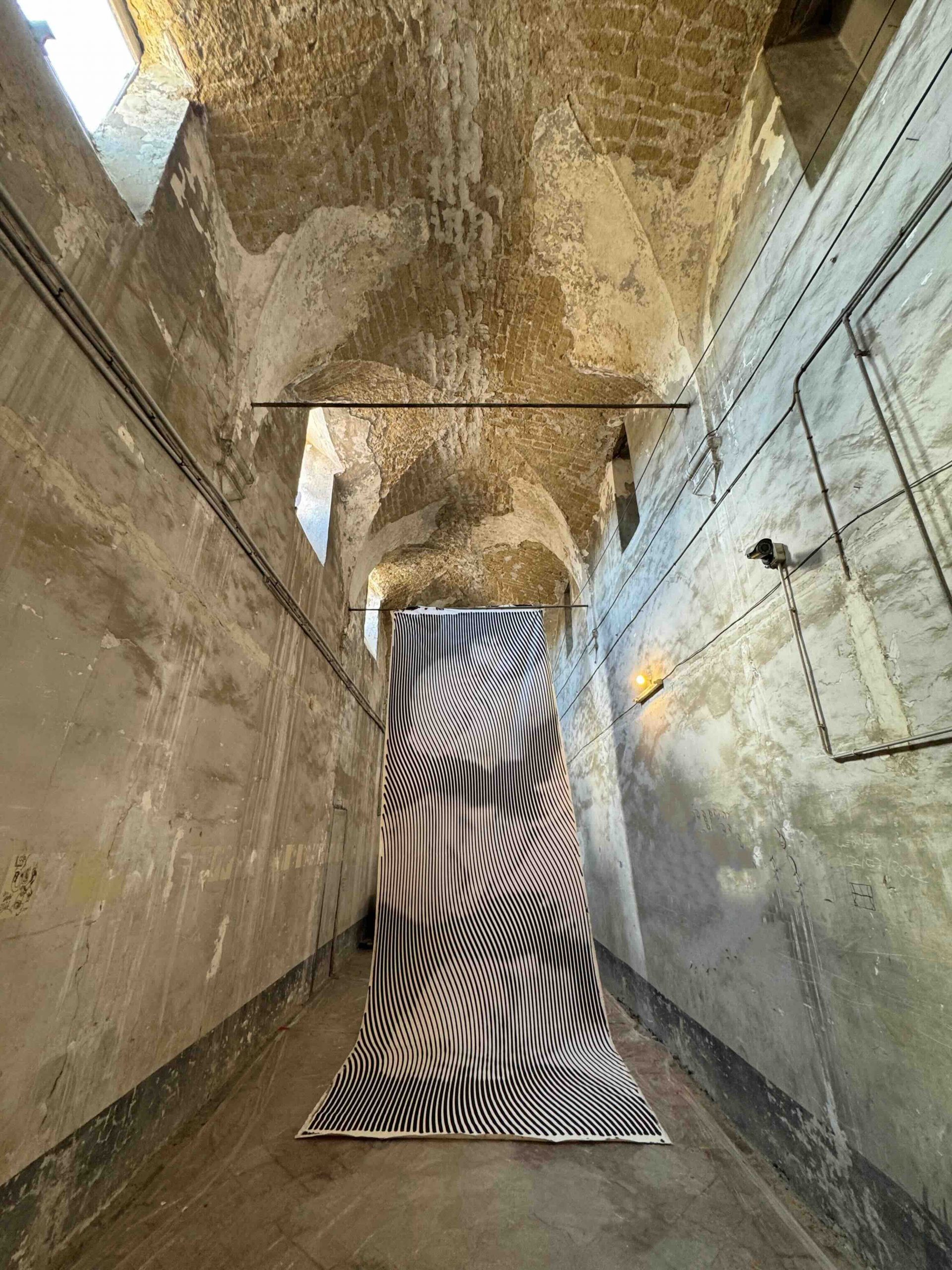
Giulia Selvaggia Virgara triennale
What is your main source of inspiration?
Today, my main source of inspiration is society, particularly how technology is impacting our lives, behaviors, and values. I’m also inspired by the art of the past, by classical beauty, but I seek to reinterpret it through a contemporary lens. I use technology and digital tools to reimagine new visual narratives, building a dialogue between memory and innovation, past and future. That intersection is where much of my work comes to life.
What does art mean to you?
For me, art has always been a tool for communication. It’s a way to connect with others on an emotional and authentic level. It’s not about impersonal communication, but about a true connection with the viewer, mediated through my personal interpretation of reality.
