
Marinella Senatore (Cava de’ Tirreni, 1977) is a multidisciplinary artist trained in music, fine arts, and cinema. Her practice is characterized by a strong collective and participatory dimension both as methodology and content; her work combines aesthetic research with the transformative power of social engagement.
Through the use of traditional and vernacular language forms – including pop culture, dance, music, mass events- and activism, Senatore reflects on the political nature of collective formations and rituals and their possibility for social change, creating various moments of encounter, sharing and workshop.
Her works -always site-specific-are based on a potentially infinite inclusion of elements: her approach acknowledges the surrounding context, in which the artworks become functional structures and create new ambiences through the use of multiple media (light installation, sound, performance, etc.).
In 2012, Marinella Senatore created The School of Narrative Dance (SOND), a nomadic, free of charge, and non-hierarchical school that proposes an alternative educational system based on emancipation, empowerment, and self-education. With SOND, the artist creates platforms that invite often non-professional community members to create site-specific collective movements and storytelling activities, aligned with the collective rituals of public festivals and protests alike. The school’s activities vary according to their hosting space: in ten years, they have taken place in over 23 countries, involving about 8 million people.
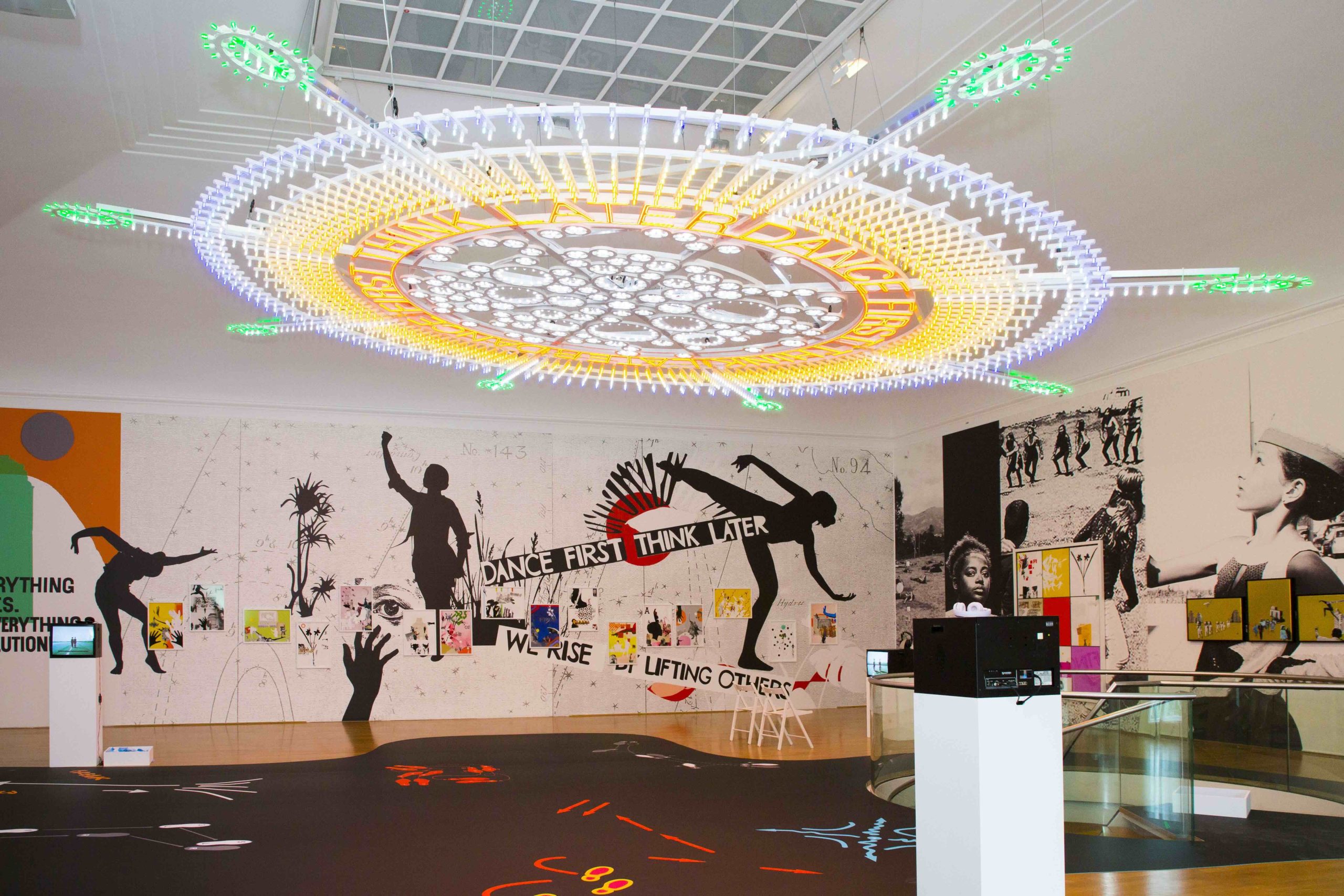
Marinella Senatore. Dance First Think Later. Credits Barbara Donaubauer
Rosas (2012), an Opera in three acts conceived for the screen, is the largest participatory project carried out in an urban context through the involvement of various institutions in three different countries, – Germany, England and Spain – which was joint by over 20,000 participants.
Senatore places social connections at the basis of her work and focusses her research on activation, stressing the power of art to start a process of individual and collective emancipation. The artist declares: “community, empowering and emancipation: as artist, my role is to activate a mechanism – which is the artwork – with the aim of creating a transforming force from the encounter of its own constituting elements, until it reaches the viewer.”
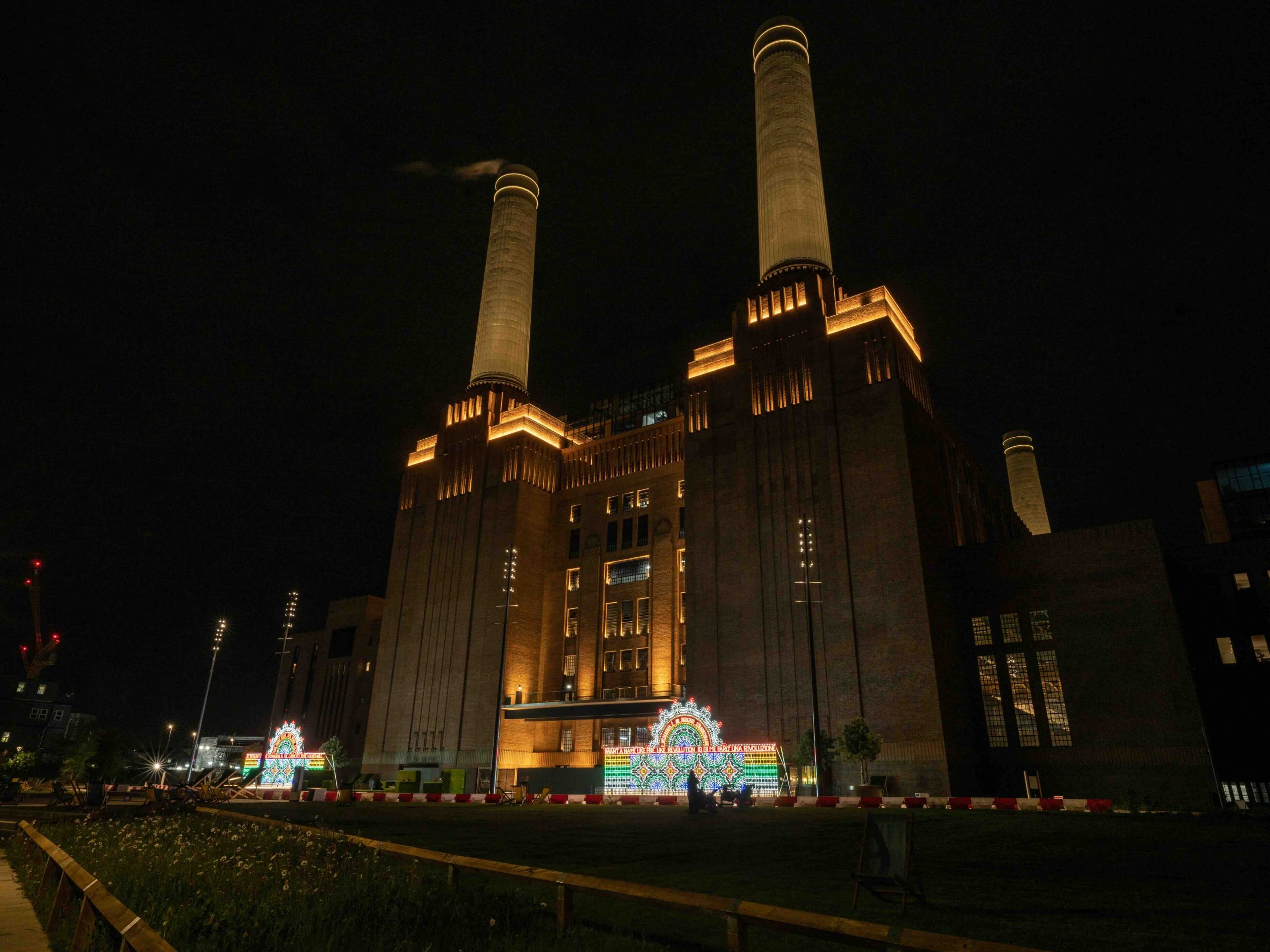
Marinella Senatore, Assembly, 2021, Battersea Power Station, London, 2022. Credits Hektor – FOIfilms
Workshops are an essential part of these kind of performative and installation projects, as they reunite people through new ideas of sharing, rethinking vulnerability, productivity and other social stigma.
Since her training at the National Film School in Rome (where the artist studied direction of photography), the light has always been a key element for the artist: “the light can prove to be a tool for narration and poetic creation, as well as for resistance and cohesion”
The large-scale light sculptures –handcrafted in Apulia, Italy, with LED bulbs and recycled materials – have been designed for public places, museums, and festivals worldwide. These “luminarie” have become a key, recurring element to Senatore’s production: particularly significant for their catalytic power, these ephemeral architectures create temporary spaces for rituals and socialization. Inspired by Southern Italy’s traditional illuminated decorations, they incorporate evocative quotes about empowerment and community building.
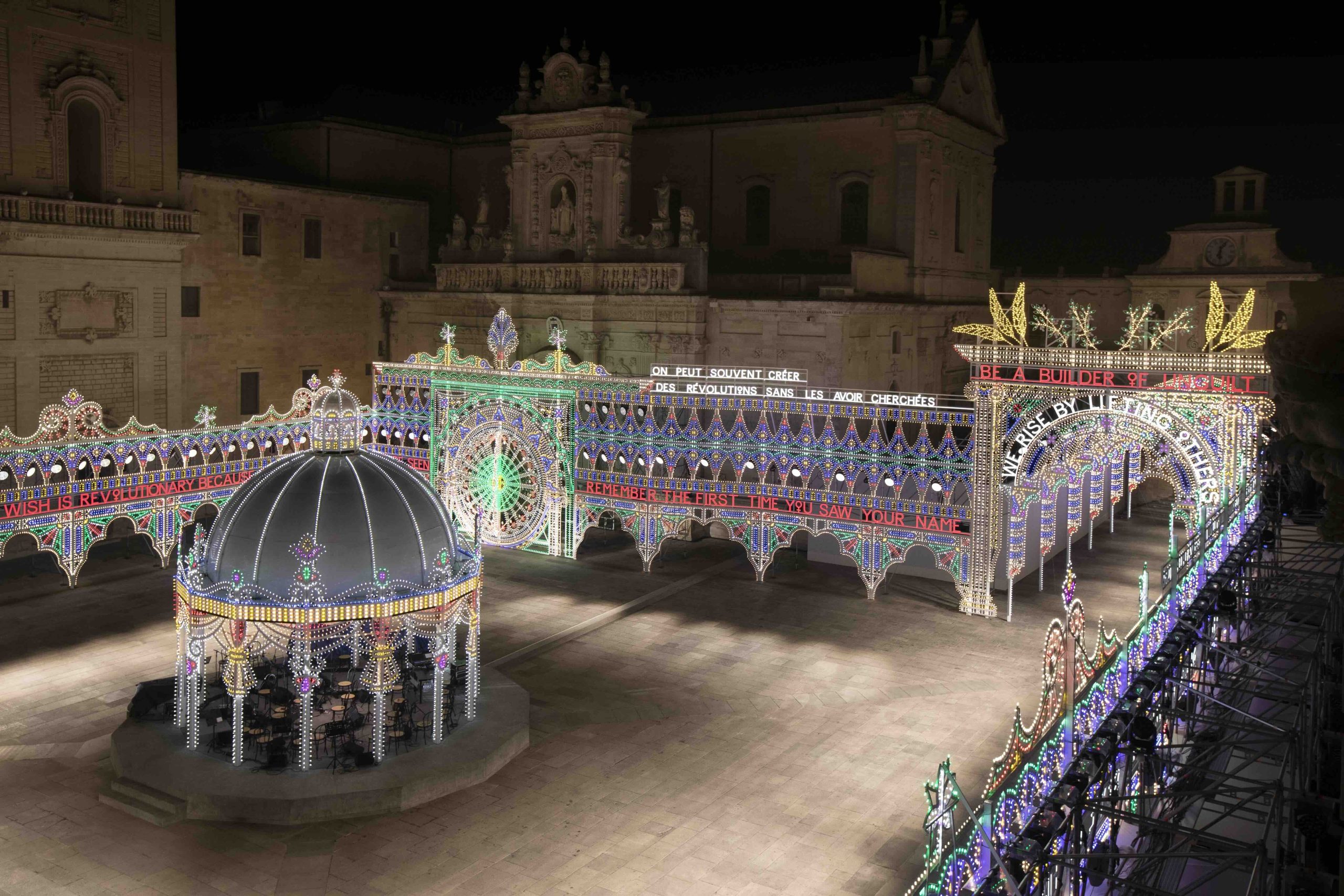
Marinella Senatore, Dior Cruise 2021. Piazza Duomo, Lecce. Credits A. Garofalo. Courtesy The Artist and Dior
Specifically created for the exhibition Make It Shine at Mazzoleni, Senatore’s new neon sculptures have been produced with an innovative technology that does not require mercury, a highly polluting metal already banned in several European countries. This procedure guarantees their future durability and replicability.
Amongst the large-scale commissioners, we mention: Hayward Gallery / Southbank Center, London; Noor, Riyadh; M.A.C.C.A., Peccioli; FORMAT Festival, Betonville, Arkansas; Kappa Future Festival, Turin; Domaine Pommery, Reims; Fondazione Sandretto Re Rebaudengo Guarene; Kurgarten vor dem Kurhaus, Baden-Baden; Battersea Power Station; Fondazione Palazzo Strozzi, Florence; Berlinische Galerie; FIAC Hors Les Murs at the Jardins des Tuileries, Paris; Steirischer Herbst’21, Graz;Villa Borghese, Rome; Museo del Novecento, Milan; High Line, New York City; and the 34th São Paulo Biennial.
Senatore’s works have been commissioned and exhibited by Italian and international institutions alike, including: Museo Madre, Naples; Palazzo Grassi, Venice; Moderna Museet, Stockholm; Museo Boijmans Van Beuningen; CCA, Tel Aviv; Centro de Arte Dos de Mayo, Madrid; Serpentine Gallery, London; Fondazione Sandretto Re Rebaudengo, Turin; Petach Tikva Museum of Art; Museum of Contemporary Art of Chicago; Bozar, Bruxelles; Kunsthalle Sankt Gallen; Palais de Tokyo, Paris; BAK Utrecht; Schirn Kunsthalle, Frankfurt; High Line, NY; Centre Pompidou Paris; Kunsthaus Zürich; ICA, Richmond; Musée d’art contemporain de Montréal; Pearl Art Museum, Shanghai; Berlinische Galerie, Berlin; MAXXI, Rome; Museo del Novecento, Milan; Kästner Gesellschaft, Hannover; Museum der Moderne Salzburg; Museum VILLA STUCK, Munich.
Over the years, The School of Narrative Dance has received numerous commissions from institutions such as: Centre Pompidou, Paris; Kunsthalle, Mannheim; Castello di Rivoli Museo d’Arte Contemporanea, Turin; MAXXI, Rome; Venice Biennale, 2015; Faena Art Forum, Miami; Queens Museum, New York; Kunsthaus, Zurich; Villa Medici, Rome; Manifesta12; Kunsthalle, Bregenz; Peggy Guggenheim Collection, Venice; Magazzino Italian Art, Cold Spring, NY; Serlachius Museums; Museo Pecci, Prato; Colomboscope, Sri Lanka; Festival of Regions and Steirischer Herbst, Austria; Palais de Tokyo, Paris; Blitz, Malta; Museum der Moderne, Salzburg; Museum Villa Stuck, Munich; CCA Tel Aviv.
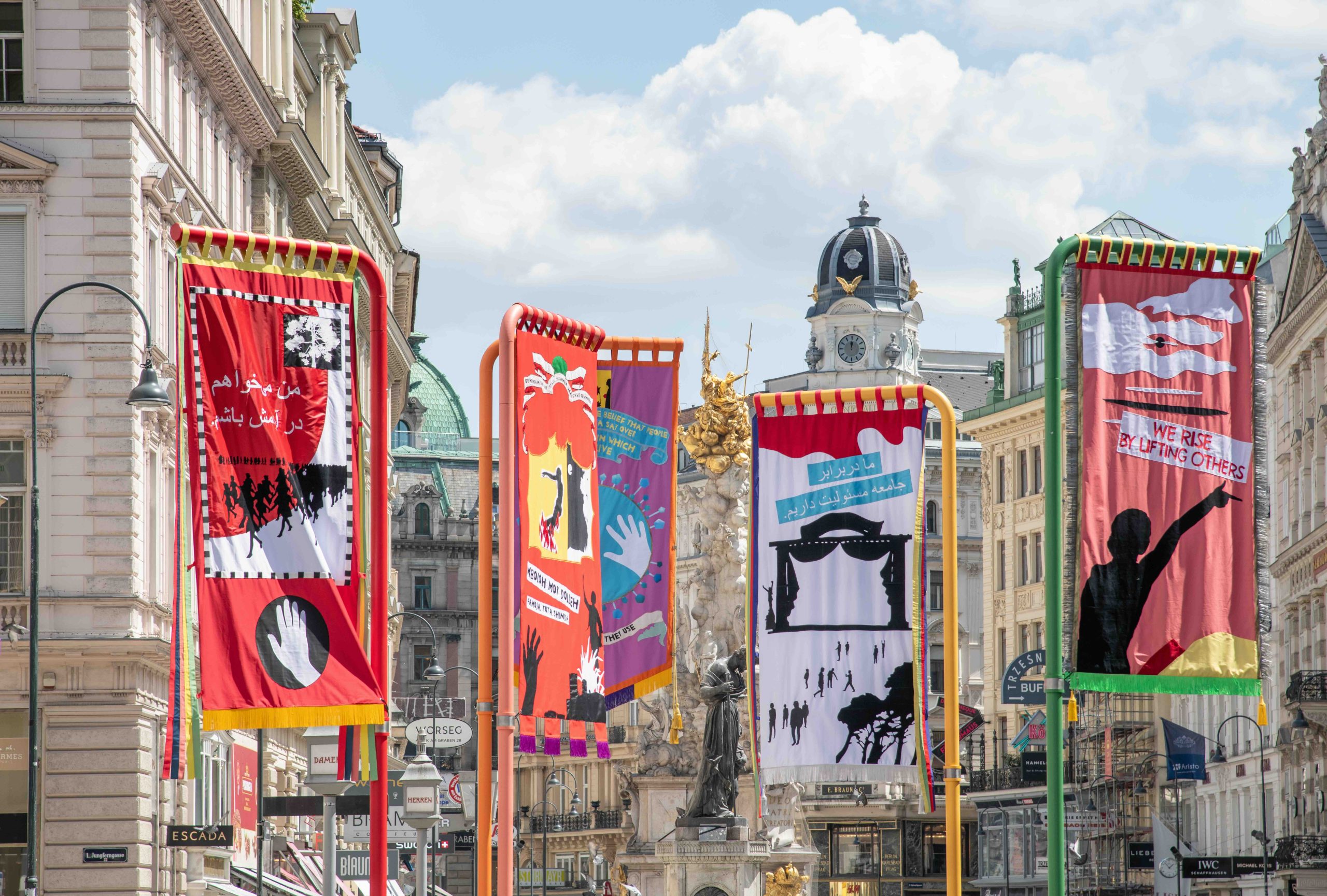
2025-Marinella Senatore KOR Vienna may 12
The artist has participated in the following contemporary art biennials: Venice Biennale; São Paulo Biennial; Lyon Biennial; Thessaloniki Biennial; Liverpool Biennial; Athens Biennial; Havana Biennial; Gothenburg Biennial; Cuenca Biennial; Pune Biennial; South Tyrol Biennial; Bangkok Biennial; and Manifesta12, Palermo.
Senatore won numerous awards, such as: Lio Art Prize, 2023; ACACIA Prize 2021; Cantica21 Italian Contemporary Art Everywhere Prize; Cinello Unlimited Prize; Italian Council Award (4th and 7th editions); Evelyn Award; York Museum, UK; Art Grant – The Foundation of Arts and Music for Dresden, Germany, 2017; MAXXI and AMACI (Associazione dei Musei d’Arte Contemporanea Italiani) Prize, 2014; Castello di Rivoli Fellowship, 2013; American Academy in Rome Fellowship; Gotham Prize and 23rd M. Bellisario Prize, 2012; The New York Prize and Premio Terna, 2010; and Dena Foundation Fellowship, 2009.
In addition to be teaching in several universities, Senatore regularly supports activities at the following international institutes: Goldsmiths in London, NYU in Berlin, ICA-Institute of Contemporary Arts in London, Foundation d’Entreprise Ricard in Paris, Accademia delle Belle Arti di Napoli in Naples, Universidad Complutense of Madrid, University of Granada, University of Turin, Universidad de Castilla-La Mancha, NABA Nuova Accademia di Belle Arti in Milan and Rome, IUAV in Venice, Hochschule für Gestaltung in Frankfurt, and Guggenheim in New York. From 2021 Senatore is the only European artist to be teaching at The Alternative Art School (TAAS).
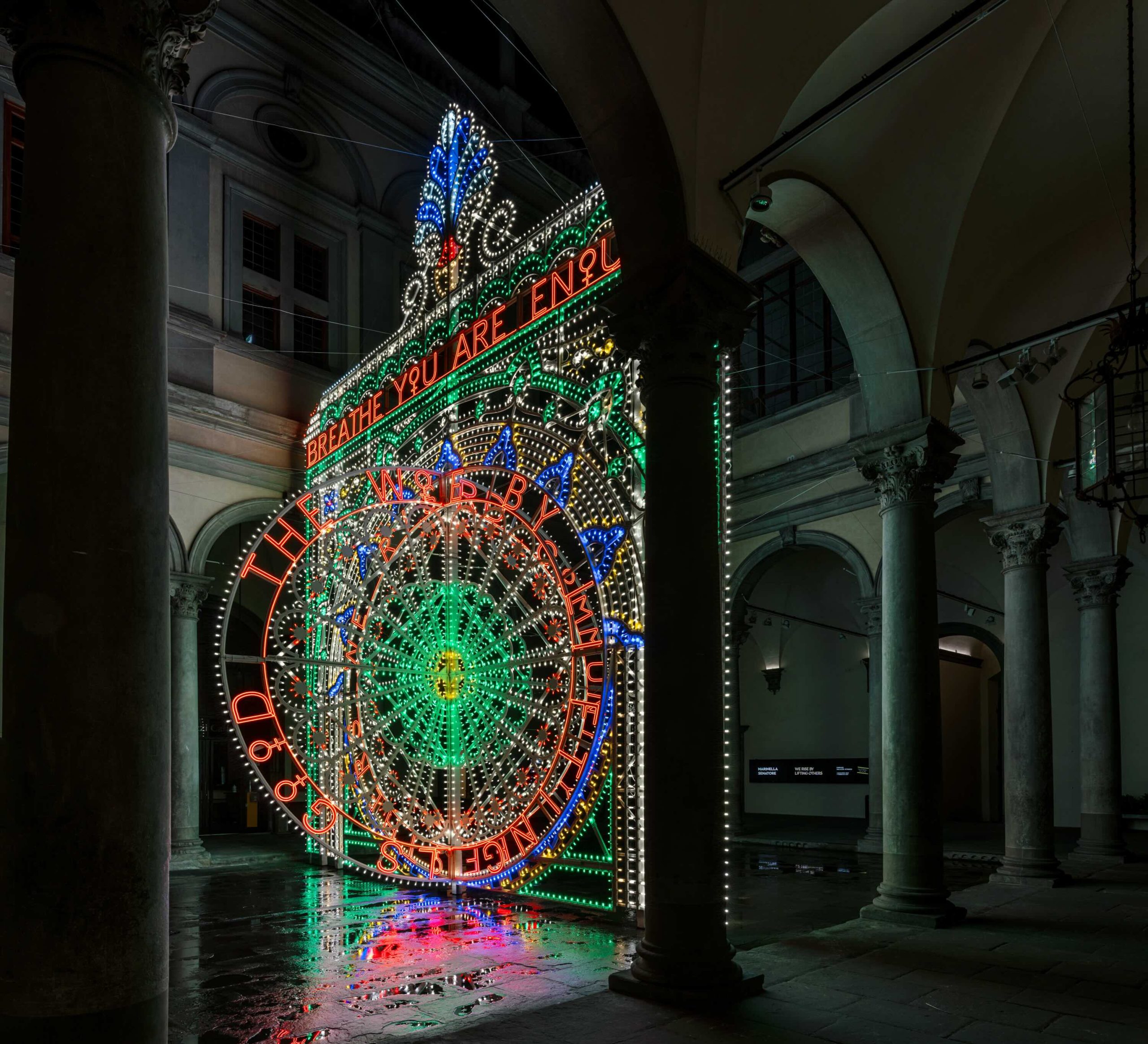
Marinella Senatore, WE RISE BY LIFTING OTHERS, 2020. Palazzo Strozzi, Florence. Credits OKNO Studio
1) How would you describe your latest works?
My latest works can be described as collective, performative, and deeply rooted in shared experience. They take shape through collaboration with communities, where individual voices converge into a plural narrative. These works exist across different media—performance, installation, workshops, collage—but are unified by an interest in participation as an artistic and political gesture. It’s everything about evolving processes that reflect the social contexts in which they are produced.
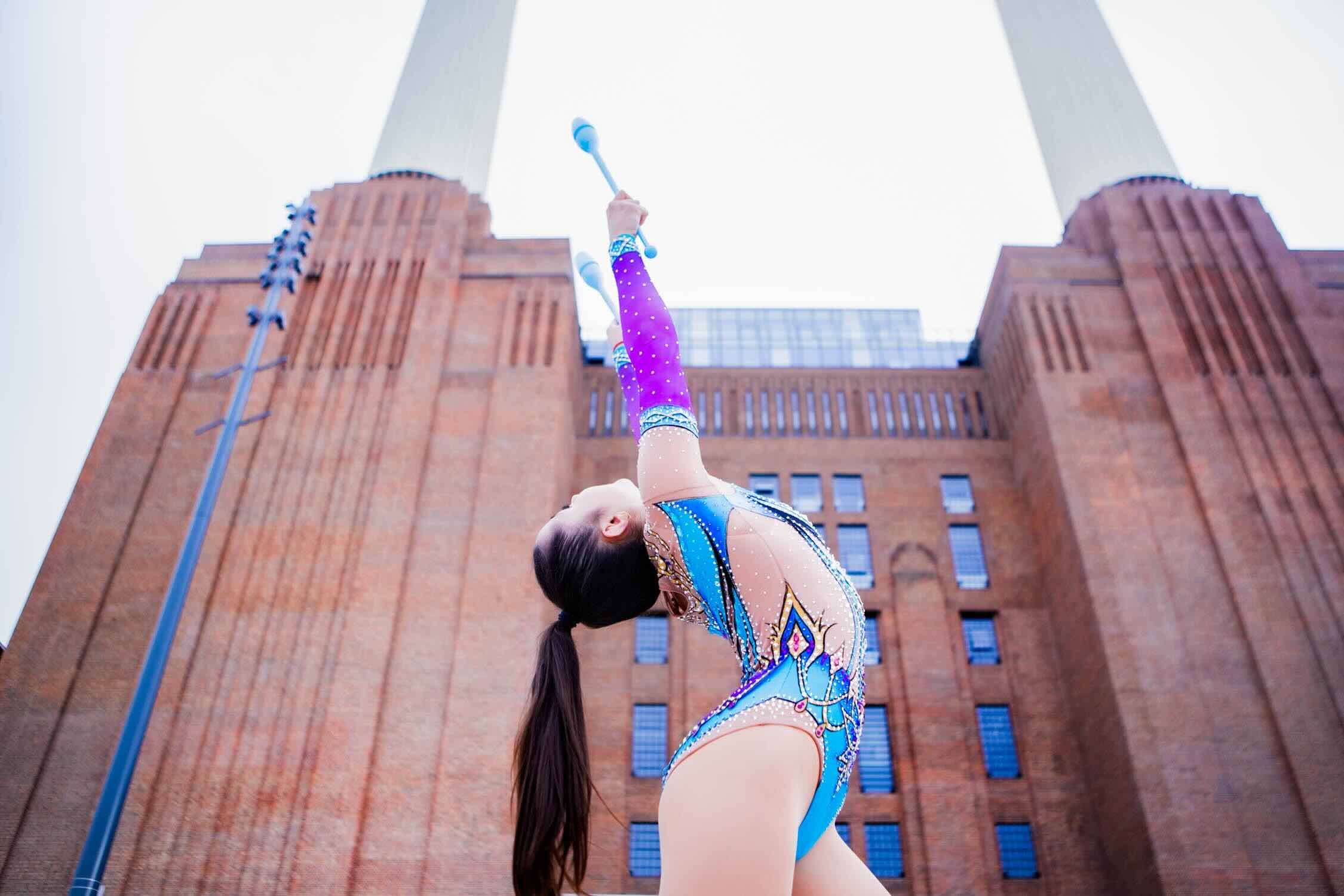
Marinella Senatore, Afterglow, Battersea Power Station. Credits Christina Almeida
2) What is the message you want to send?
Empowerment. I am interested in affirming the transformative potential of collective action and in questioning traditional hierarchies of power, authorship, and visibility. My work seeks to remind us that culture is not something passively consumed, but something we actively create together, and that civic imagination can be a powerful tool for social change.
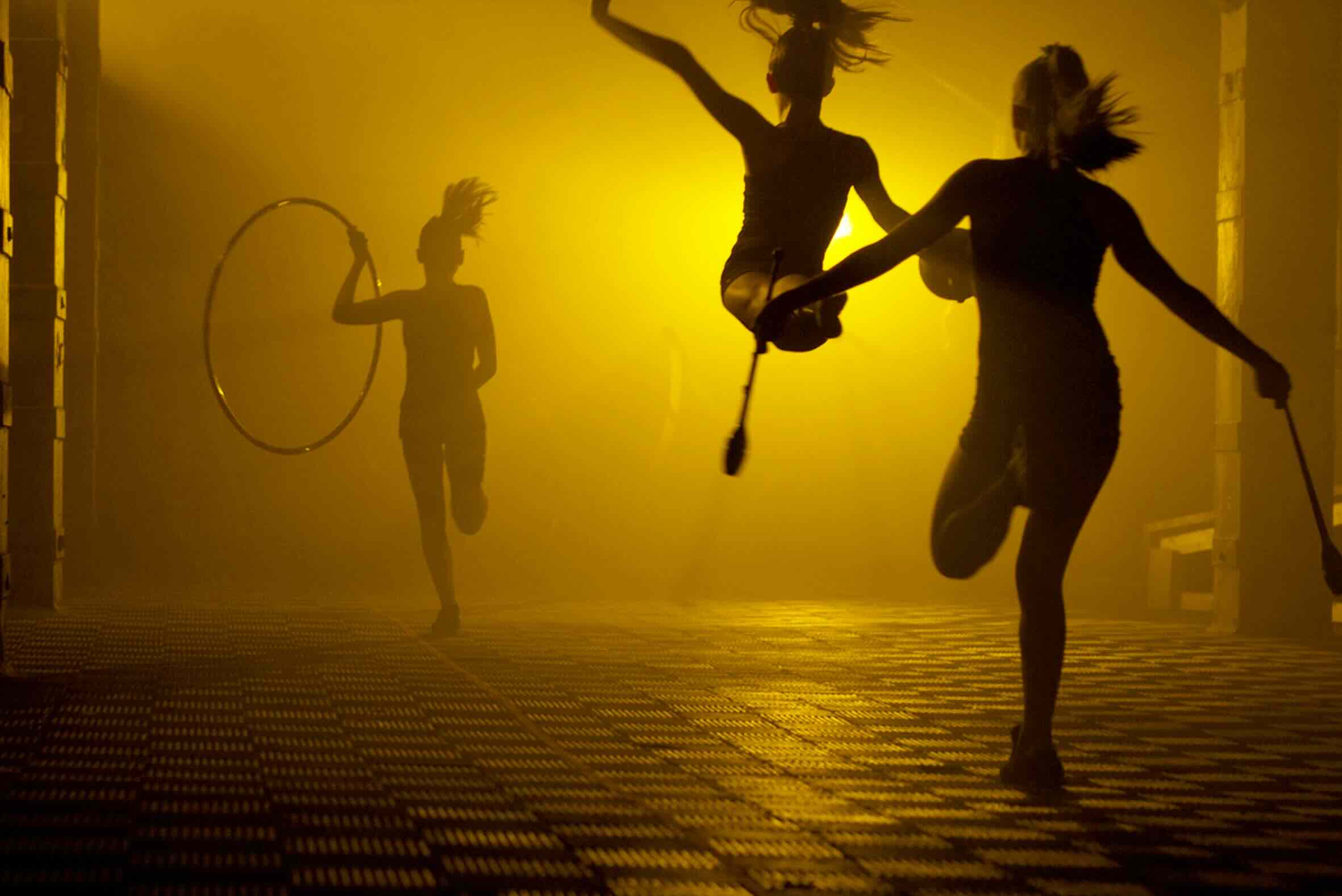
Marinella Senatore, Rosas -12, 2012, Fine Art Print on Epson Hot Press Paper, 80x105cm, Courtesy The Artist, Mazzoleni, London – Torino
3) What is your main source of inspiration?
My main source of inspiration is people—their stories, gestures, struggles, and desires. I am inspired by feminist thought, popular education, political movements, and forms of knowledge that emerge outside institutional frameworks. Cinema, music, theatre, and oral traditions also play a crucial role, especially where they intersect with everyday life and collective memory.
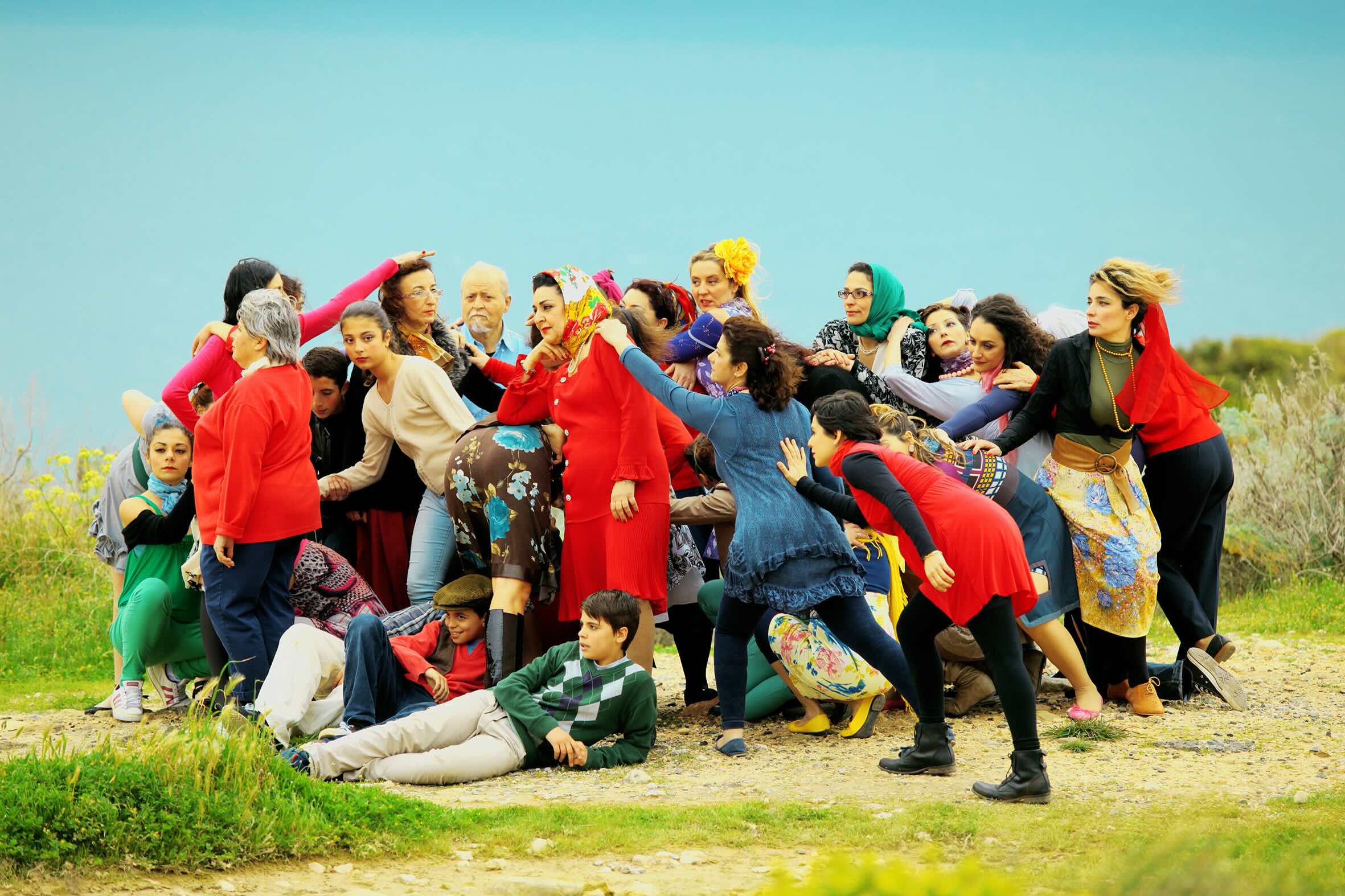
Marinella Senatore, Little Chaos_-1A, 2013, Courtesy Mazzoleni, London-Torino
4) What about your next project?
My next project will continue to explore participation as a form of empowerment and care. It will involve a new community and will unfold as a long-term process rather than a single event. I am interested in creating a space where learning, listening, and imagination can coexist, allowing new narratives to emerge—narratives that reflect both vulnerability and strength, and that point toward more inclusive and shared futures.
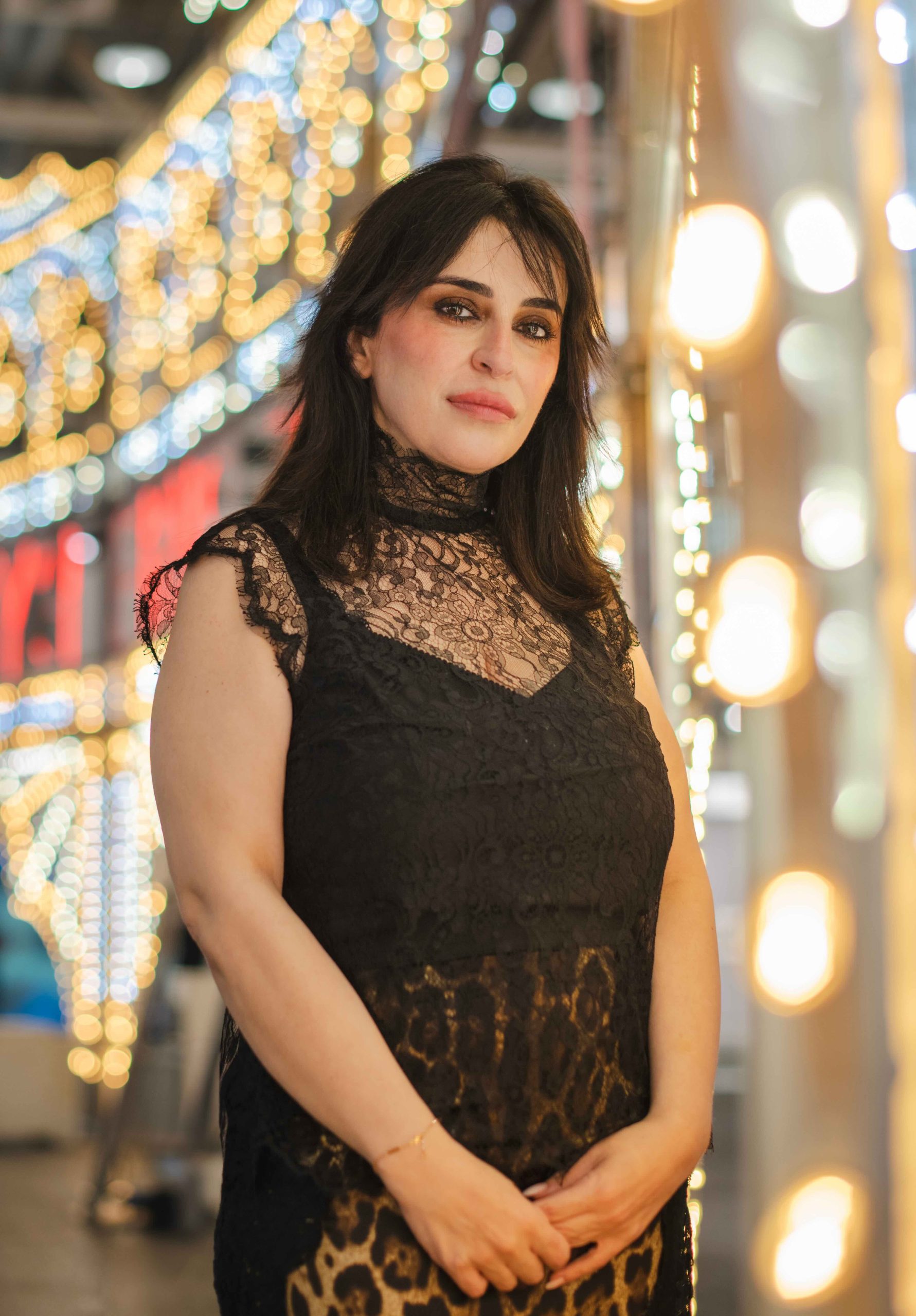
Marinella Senatore. Credits Ph. Mazen Jannoun. Courtesy The Artist, Mazzoleni