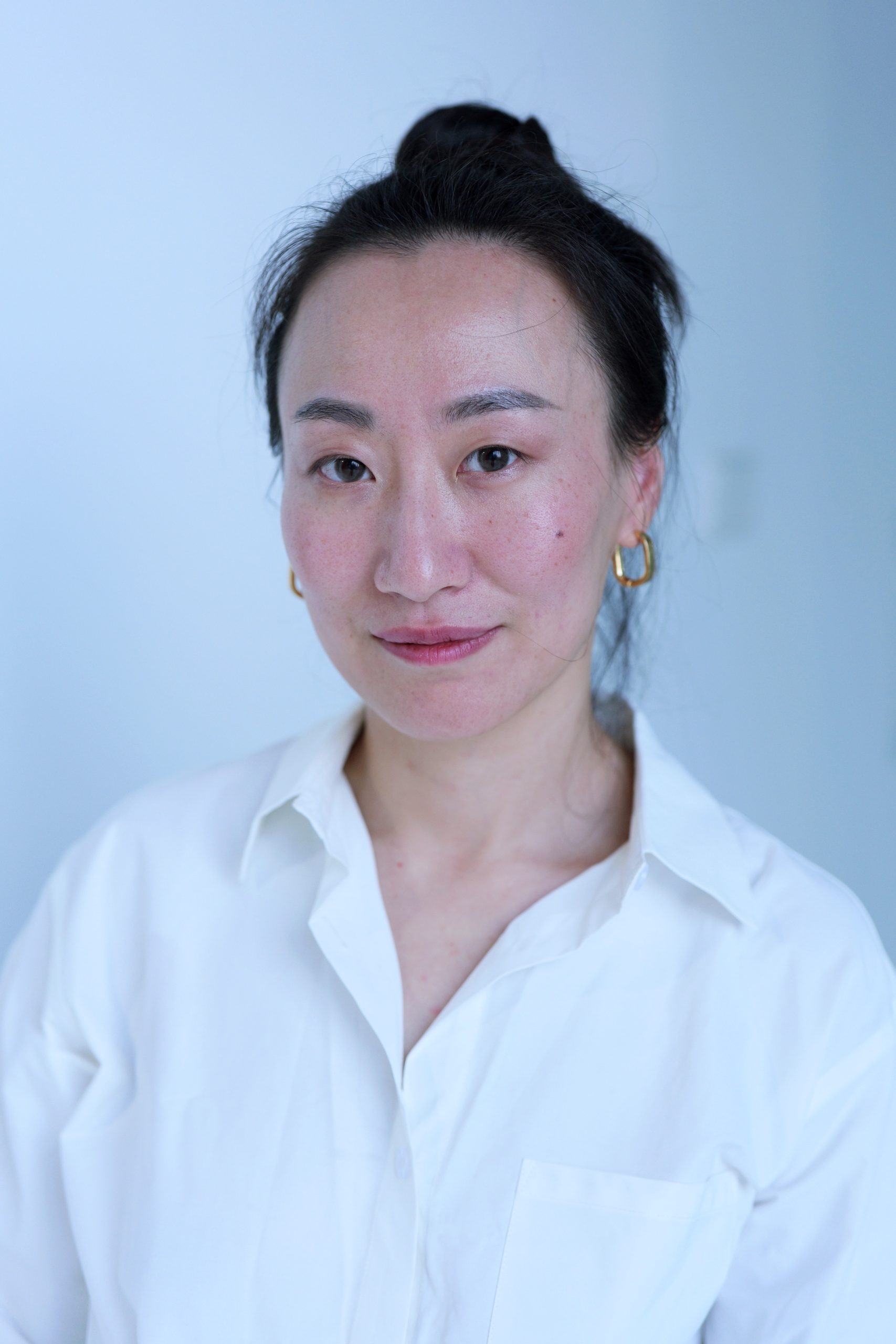
Sizhu Li is a Chinese-born kinetic installation artist currently based in Houston, the USA. She holds a BFA from Central Academy of Fine Arts and an MFA from Maryland Institute College of Art with the Toby Devan Lewis Fellowship. Sizhu’s works have been widely exhibited in Europe and America. Since 2020, her pandemic-inspired touring project Moonment has been well shown internationally, including at the Viborg Kunsthal in Denmark, The Dark Room Vertical Art Festival in Berlin,the Lille Art Fair in France, as well as at the Washington College,Alabama Contemporary Art Center, Missouri State University, and the Maryland Howard Arts Center in the United States. Additionally, Li Sizhu has received numerous art grants from different institutions, including the Lower Manhattan Cultural Council, the New York City Corps, Northern Manhattan Arts Alliance, etc.
1) How would you describe your latest works?
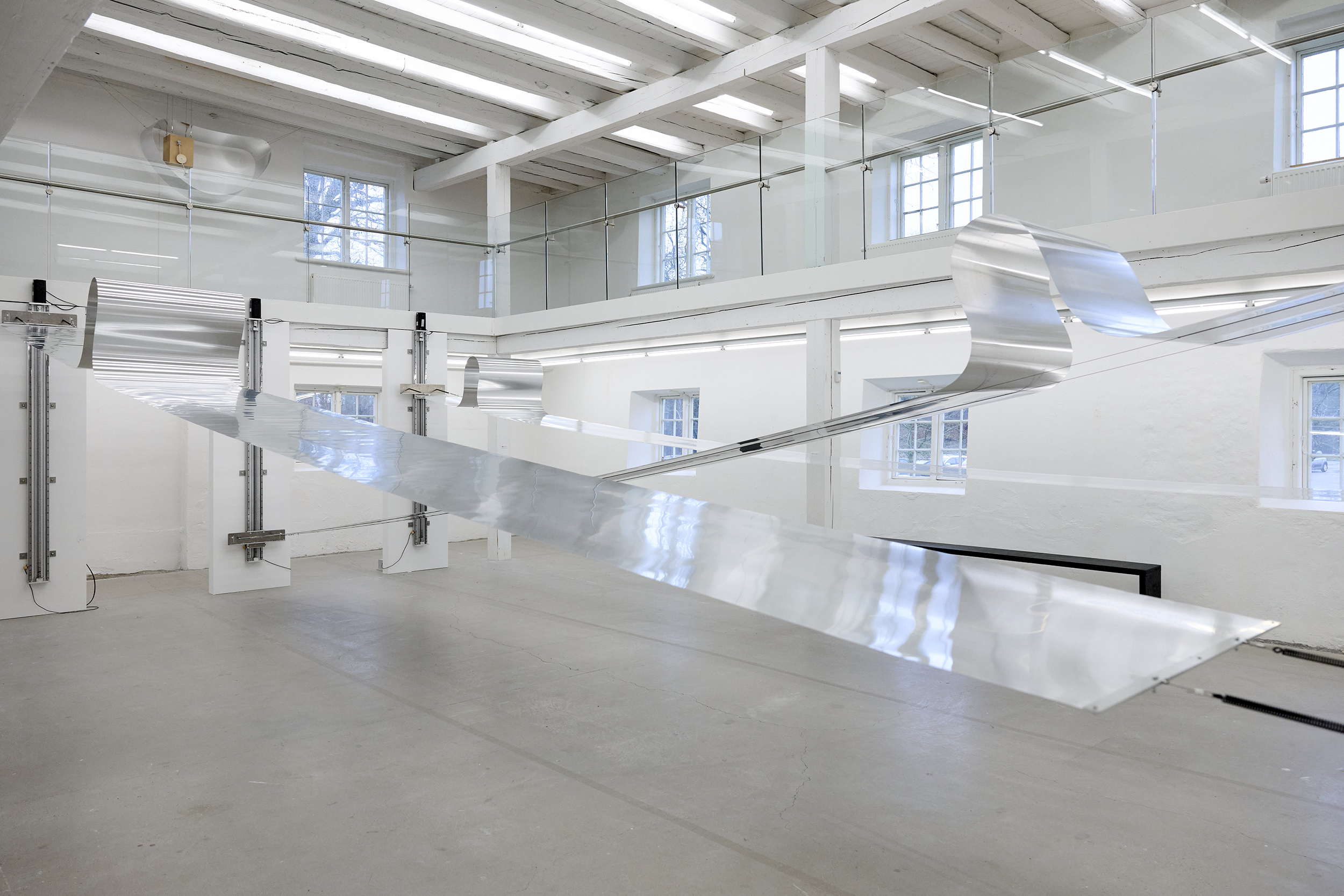
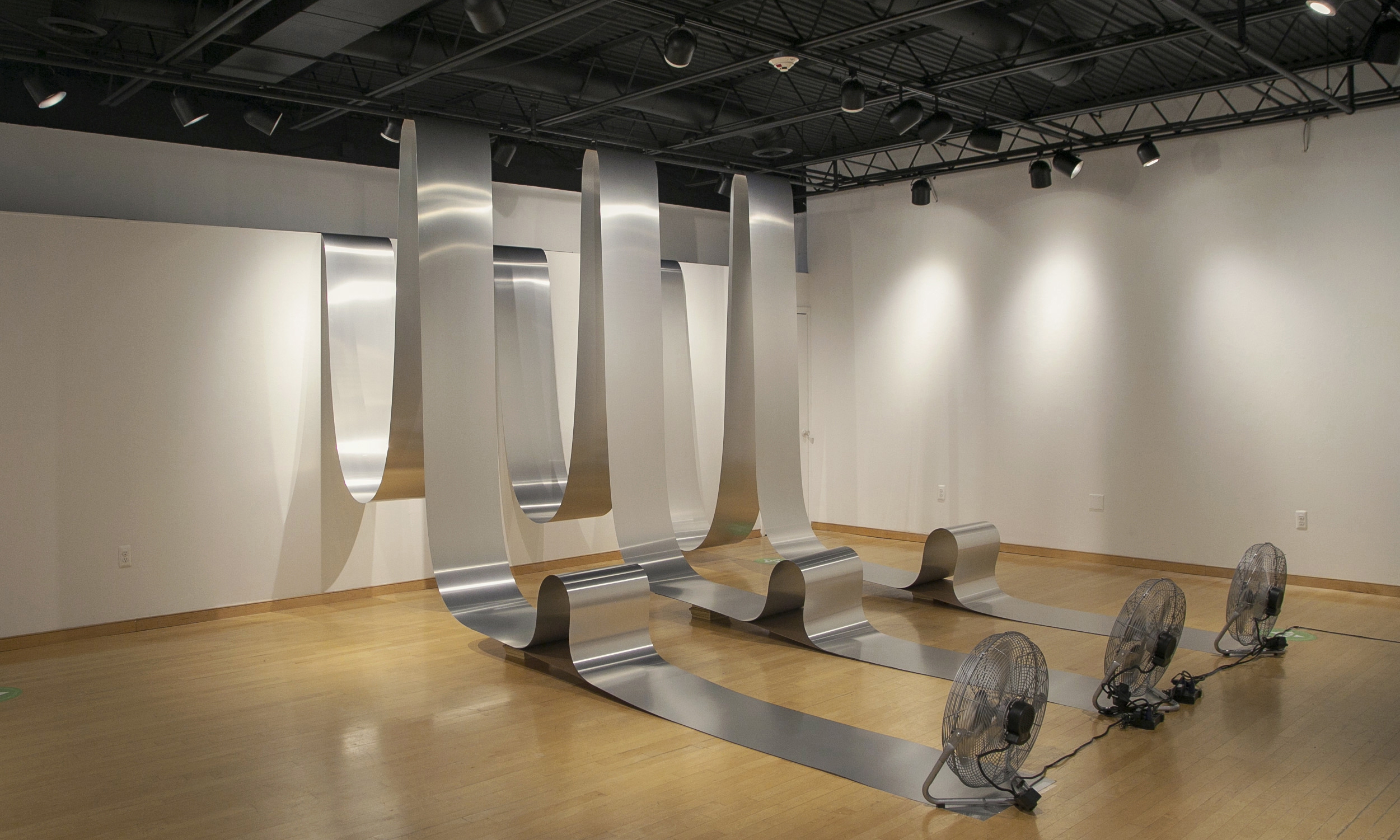
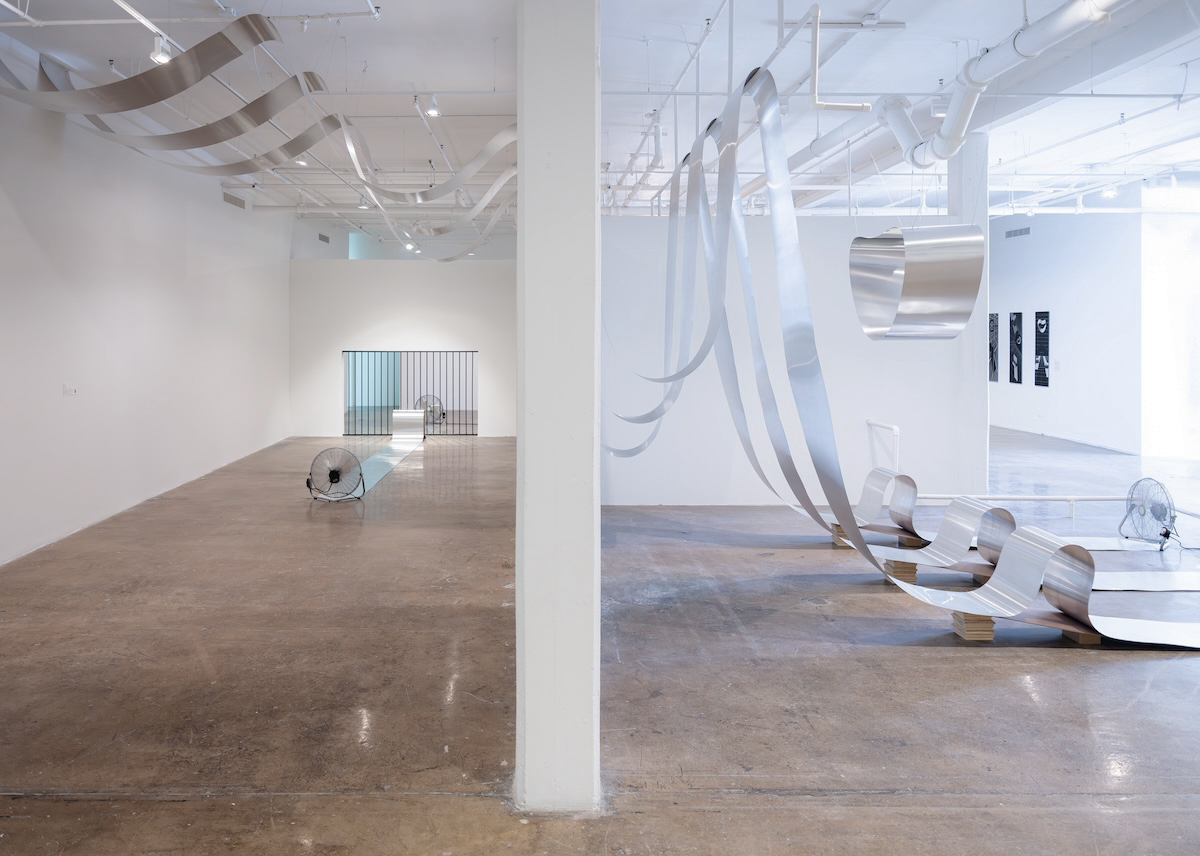
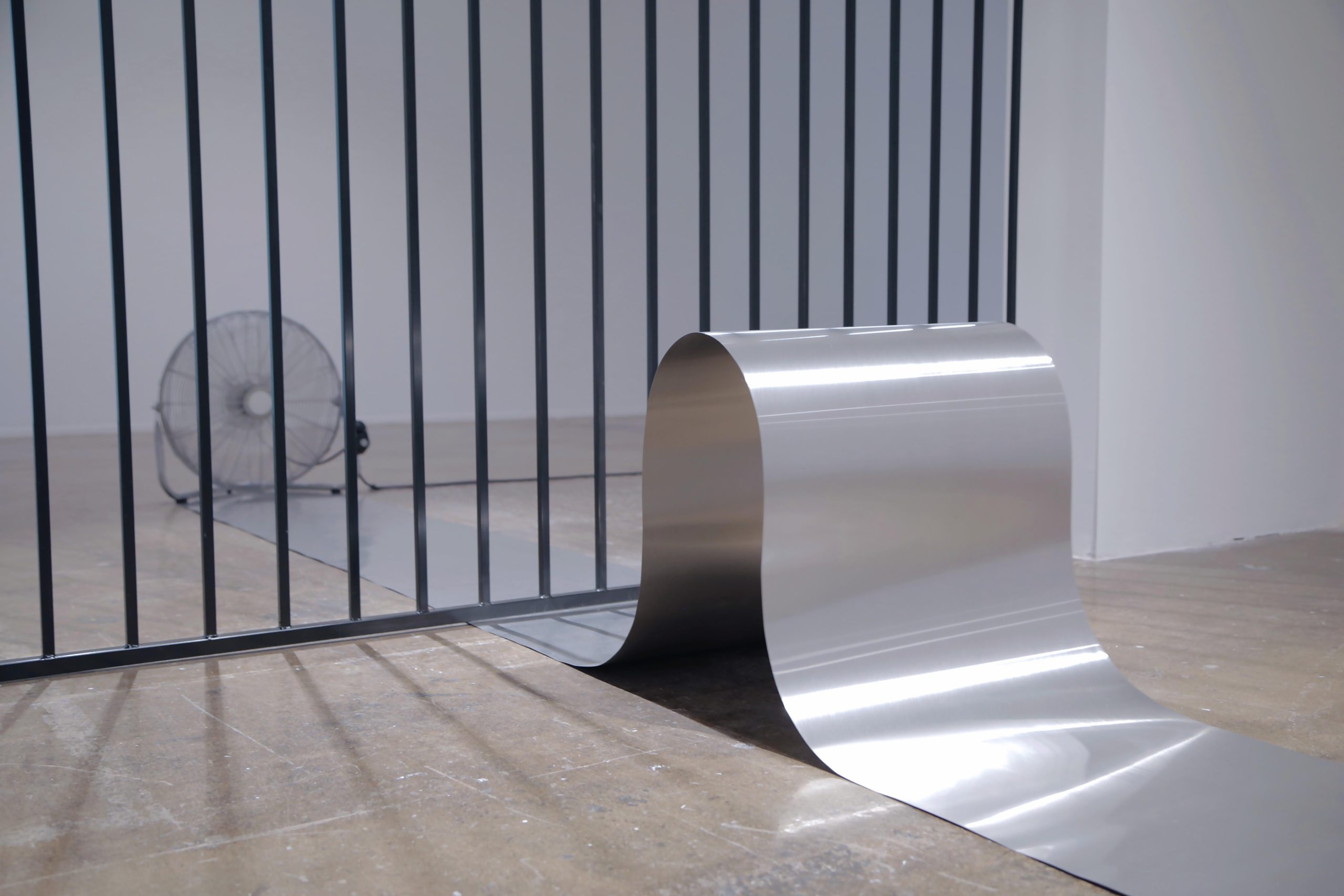
My latest works explore movement as a poetic language—movement of materials, of space, and of human emotion. I create large-scale kinetic installations that respond to architecture and invite viewers into a shared physical and psychological experience. Project Moonment use simple elements—aluminum sheets, air, light, and sound—to produce waves that feel both mechanical and alive. I’m interested in how repetitive and living rhythm can transform industrial materials into something intimate and meditative. Rather than presenting fixed objects, I aim to build environments that breathe, shift, and evolve with the presence of the audience.
2) What are the biggest challenges you have met in your career?
The greatest challenge has been realizing poetic ideas through technical means. My installations require engineering solutions, custom mechanisms, and complex logistics. Translating an imagined movement into a stable, safe, and transportable system is a long process of experimentation and problem-solving. Failures are normal.
Also, balancing technology with human sensitivity is an ongoing challenge. Throughout history, technology has served as both connector and divider, it enables communication while deepening fragmentation. I’m always working on embodying this duality, choreographing material “characters” through mechanical engineering and computational coding.
Another challenge has been navigating multiple identities and contexts. As an immigrant artist originally from China, working internationally, I constantly adapt to different cultural, political, and architectural environments. Each new site brings unique constraints—physical, social, and historical—that shape the work in unexpected ways. Learning to treat space itself as a medium, not just a backdrop, has been both demanding and rewarding.
3) What is the message you want to send?
Through my work, I want to communicate that material is alive—and so are we. My installations explore how small movements can evoke large emotional and philosophical questions. Life is not a fixed beginning or end, but a continuum, an endless flow. The aluminum wave propelled by wind and gravity echoes the Taoist idea of Yin and Yang: balance, tension, and constant transformation.
I also want to address the complex relationship between individuals, space, and society. I consider space both an artistic medium and a geopolitical context. Works like Dividing Lines, created in San Antonio using local fences and irregular walls, respond directly to local social realities. As an immigrant, making connections between myself and local communities is central to my practice.
Ultimately, my message is about healing and belonging. In a fragmented world, I hope to create moments where technology, material, and human presence come together to form a shared, reflective experience.
4) What is your main source of inspiration?
My inspiration comes from three intertwined sources: material, space, and philosophy.
Material inspires me first. Aluminum, for example, is lightweight yet strong, reflective yet absorbing. Originally designed to protect buildings, it adapts to any environment. Watching it move, crumble, and breathe under wind makes me feel that it has its own personality and humor.
Space is another crucial source. I approach space as something tangible, as significant as wood or metal. Each exhibition site—its architecture, history, and social context—shapes the final form of the work. I often integrate existing structures such as beams, pipes, and columns directly into my installations.
Philosophically, Taoism deeply influences me—the idea that life is a continuous flow of forces rather than a fixed structure. I am fascinated by the push-and-pull dynamics of nature, by how technology and humanity interact, and by how art can reveal unseen connections within everyday environments. Also, other Philosophy and myth such as Sisyphean.
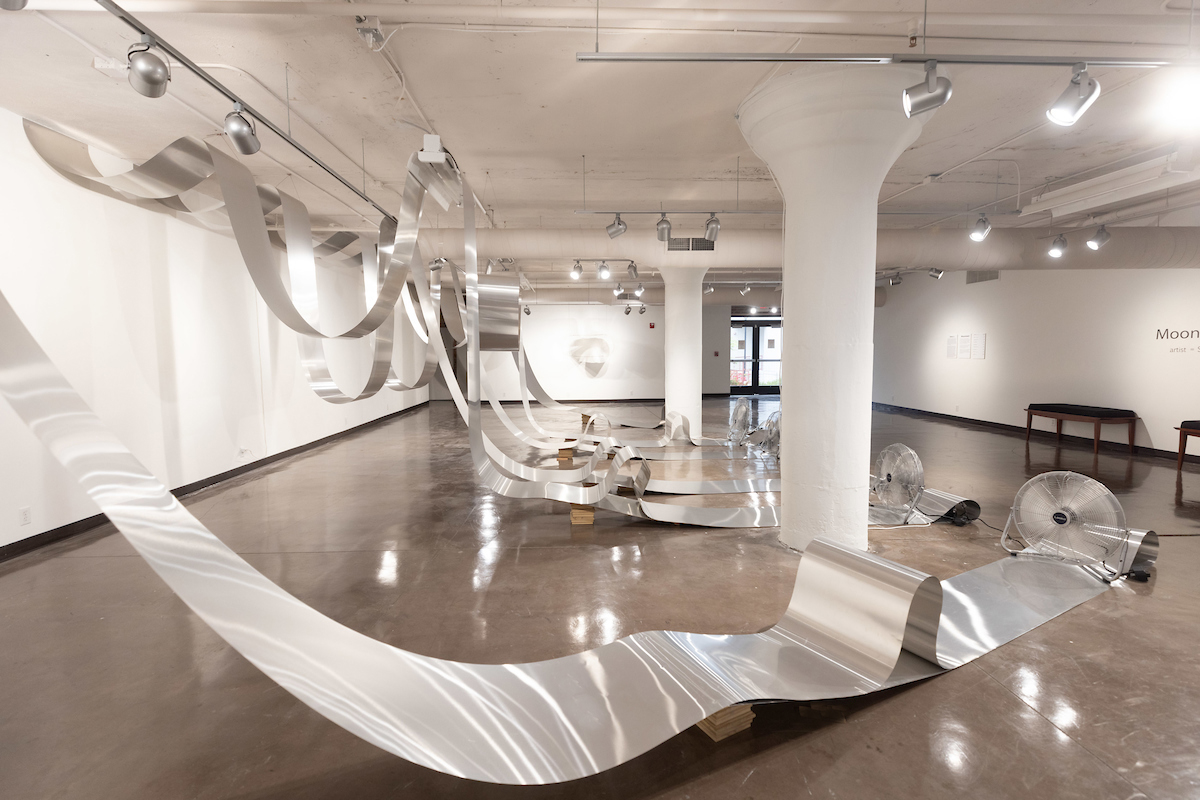
Brick City and Carolla Art Galleries on October 20, 2021. Jesse Scheve/Missouri State University
5) What about your next project?
I have two new project, one project expands my installation practice into digital space through a 3D modeling video piece combined with AI generation, with the possibility of evolving into a VR experience. In this work, an aluminum wave will journey through virtual landscapes—cities, oceans, deserts, and outer space—eventually arriving somewhere unknown, transforming architecture and location into fluid, uncertain environments. Digital space allows me to elevate architectural ideas beyond physical limits, reshaping scale, gravity, and perspective in ways impossible in real installations. At the same time, the project reflects on the uncertainty of our rapidly emerging AI-driven digital world, questioning how technology is redefining place, identity, and human experience. It explores both the creative potential and the ambiguity of this new reality, inviting viewers to reconsider how we will inhabit the virtual spaces of the future.
Another project I am developing remains centered on material exploration. I have been experimenting with metal sheets, seeking to create traces of time by working with the most damaged and worn surfaces. These imperfect materials form the basis of an installation that speaks to vulnerability, self-acceptance, sustainability, and a spirit of Maximalism—an aesthetic intentionally opposite to that of my Moonment series. In Moonment, the metal waves require brand-new, flawless aluminum sheets for site-specific exhibitions, as even the smallest manufacturing blemish can disrupt the precision of their movement. This new direction embraces what my previous work must reject, transforming imperfection into expressive possibility.