
Born in 1988 in Seoul, Jinil Park is a leading figure in contemporary Korean design. His artistic practice moves fluidly across the boundaries of art and craft, sculpture and function. Deeply rooted in metalworking traditions, his visual language is highly personal, yet continuously evolves through conceptual, formal, and cultural influences. Park studied at Hongik University, one of South Korea’s most prestigious art institutions, earning both his bachelor’s and master’s degrees in Metal Art & Design. This academic foundation also supported his teaching career: he became an instructor at Seoul National University of Science and Technology in 2022, and an adjunct professor at Hongik University in 2023—roles that reflect his growing influence within Korean design education.
Since his first solo exhibition in 2014, Park has developed a coherent yet dynamic body of work, shown in leading galleries, museums, and fairs in Korea and abroad. His pieces, often marked by a refined minimalist aesthetic, result from meticulous experimentation with materials and metalworking techniques. His second solo show in 2020 at Crafts on the Hill in Seoul further defined his poetic approach, balancing visual lightness with material solidity. Alongside his solo work, Park has taken part in numerous group exhibitions, showcasing his creative vitality and openness to dialogue with other practices. Events such as the Craft Trend Fair, Gwangju Design Biennale, and IMM Cologne have brought his work to an international audience. From Seoul to London, Bangkok to Basel, his objects travel with an aesthetic that unites function and imagination.
His participation in Maison Up-Cycling Projects and Young Creative Korea also highlights his interest in themes like sustainability, reuse, and socially conscious design. Each of his objects carries a conceptual precision—telling a story and shaping both physical and mental space. Today, Jinil Park remains a vital voice for the next generation of Korean designers. His studio is a space where experimentation meets reflection, and where tradition merges with innovation. Ultimately, Jinil Park transforms metal into a poetic medium—capable of vibrating with light and movement, while holding its form between structure and dream. With a career spanning over a decade, he continues to leave a lasting imprint on contemporary creativity.
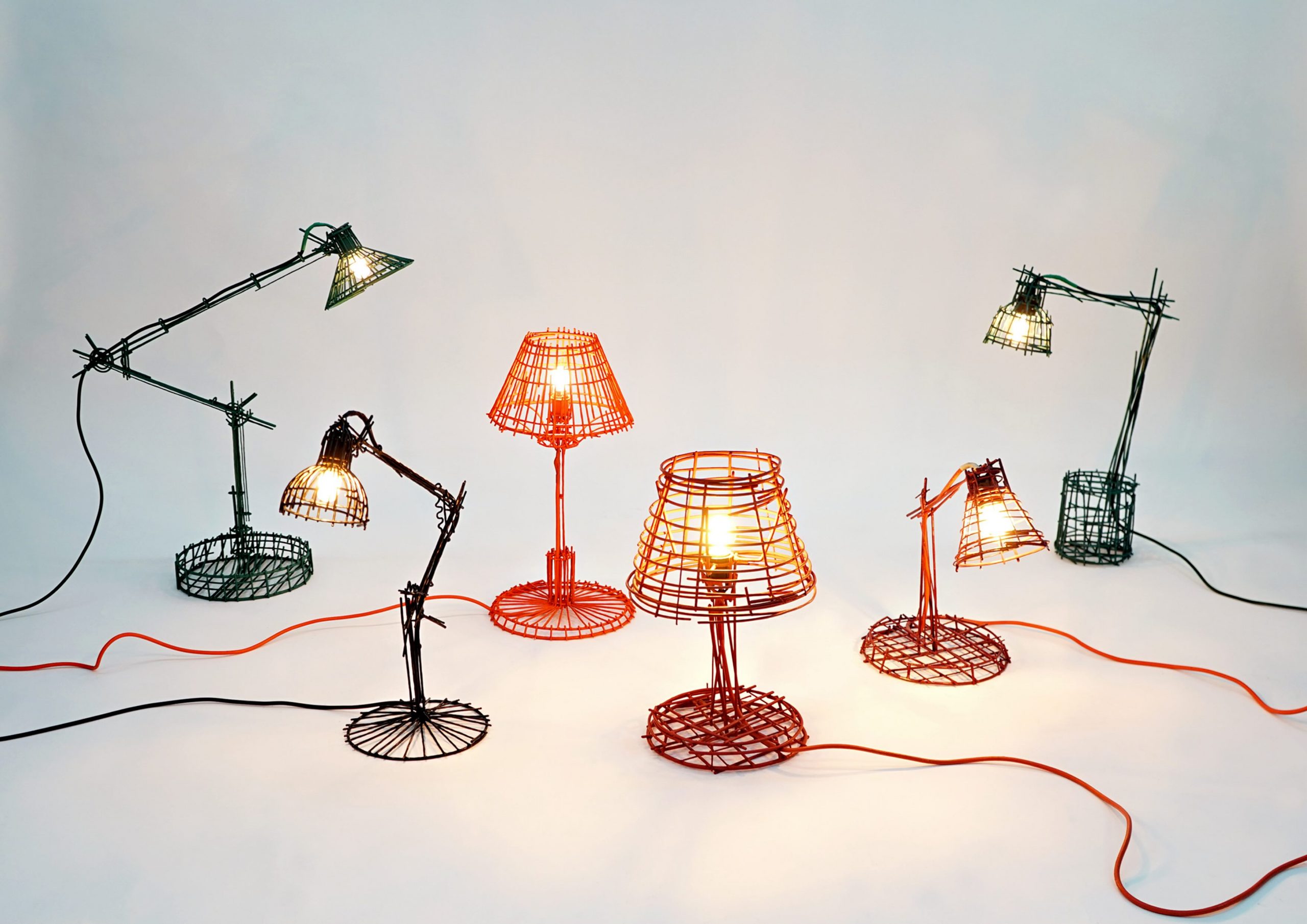
Drawing Series Lighting Collection
What are the biggest challenges you have met in your career?
One of the biggest challenges has been preserving the emotional and spontaneous quality of my sketches when translating them into physical objects. Industrial design often demands precision, consistency, and efficiency, which can strip away the personal, expressive elements that exist in freehand drawings. Finding a method that allows me to maintain the raw, intuitive energy of a sketch—while ensuring structural integrity and usability—has taken years of experimentation and effort.
Additionally, the physical strain of working with metal was another major challenge. For a long time, I hammered each piece by hand, which took a toll on my body. Eventually, I collaborated with a mechanical engineer to develop a custom machine that could replicate certain processes while still preserving the handmade character of the work.
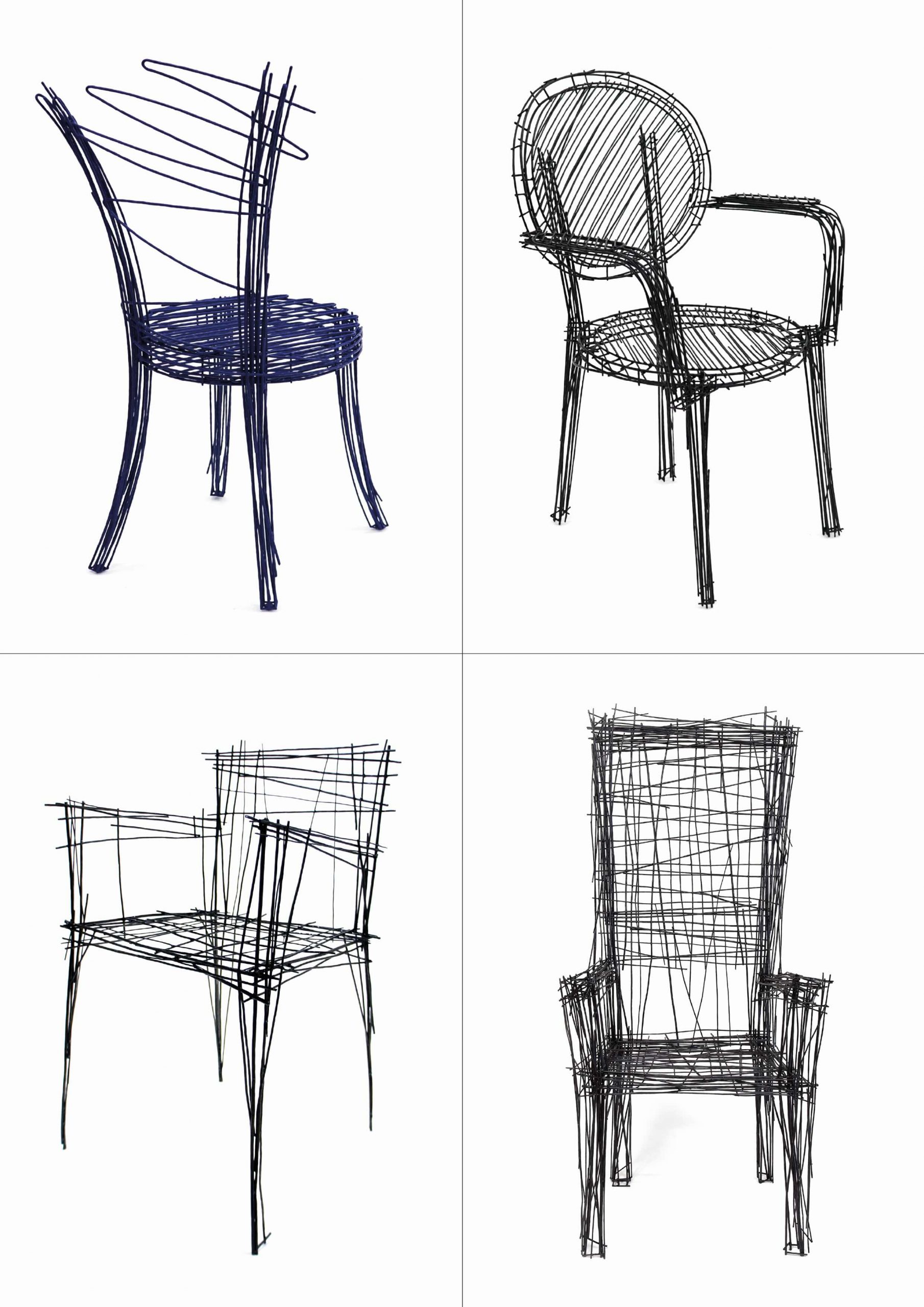
Drawing Series Chair
How was your passion for design art born?
When I entered university in 2007, the dominant trend was sleek, modern product design. At first, I followed that path, but I soon felt a disconnect between what I was drawing and what was ultimately being produced. The transformation from sketch to final object always involved compromises, and something essential—something human—was being lost.
My passion for design art truly began when I realized that my most honest and exciting ideas came from my unfiltered doodles—those spontaneous lines drawn without overthinking. I became fascinated with the idea of preserving that raw expression and making it tangible. This led me to start the Drawing Series, where I treat even the messiest line as a meaningful starting point.
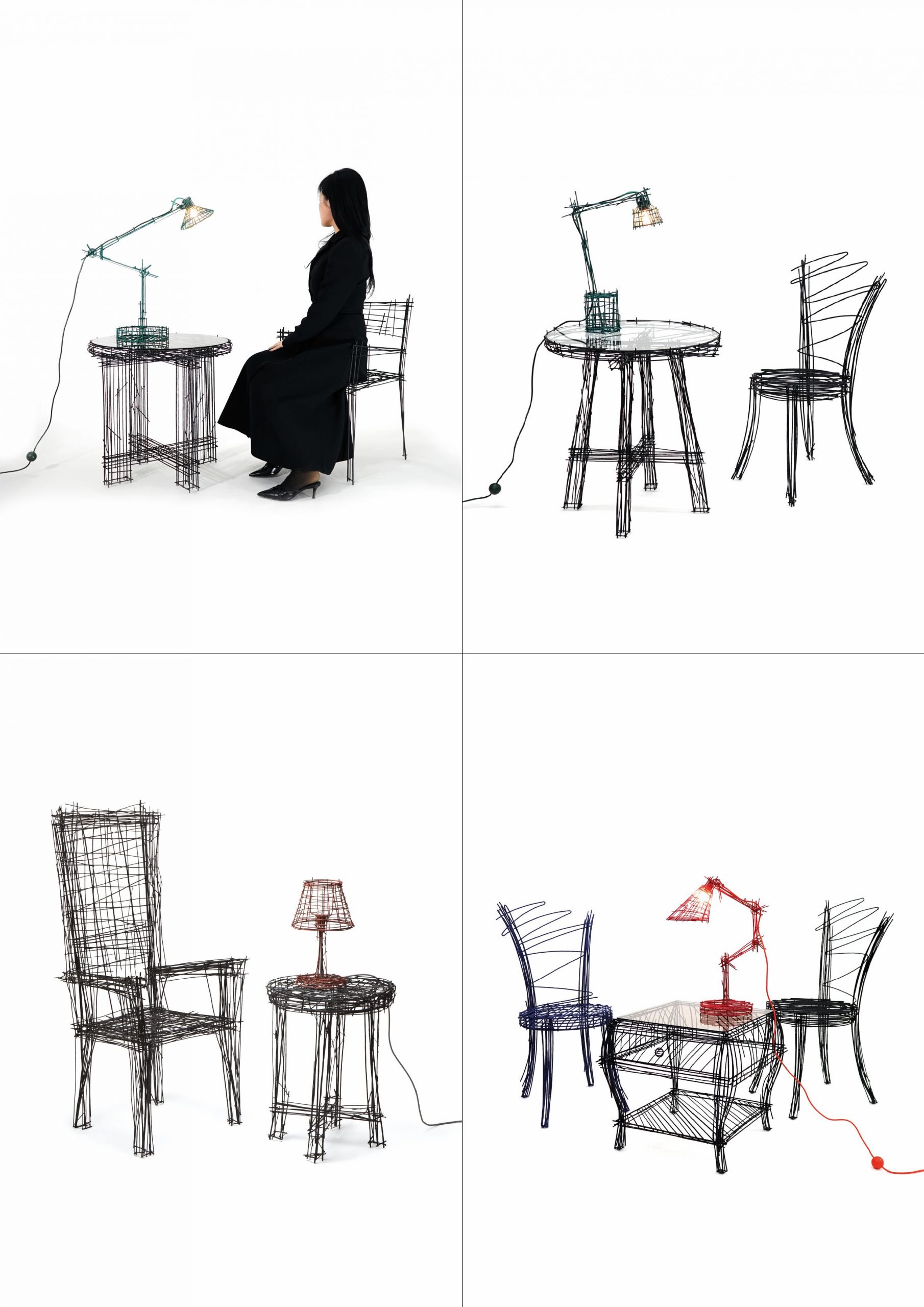
Drawing Series Set
What is your main source of inspiration?
My main source of inspiration is the act of drawing itself—specifically, the freedom and emotional energy captured in a quick sketch. I’m especially drawn to lines that seem irregular or accidental. To me, those imperfections are where the designer’s emotions and ideas are most visible. I also find inspiration in limitations—what a single line can or cannot do, how far I can push the structure without losing the essence of the sketch. That challenge excites me creatively. My students also inspire me. Teaching reminds me to stay curious and open, and watching young minds experiment encourages me to take risks in my own work.
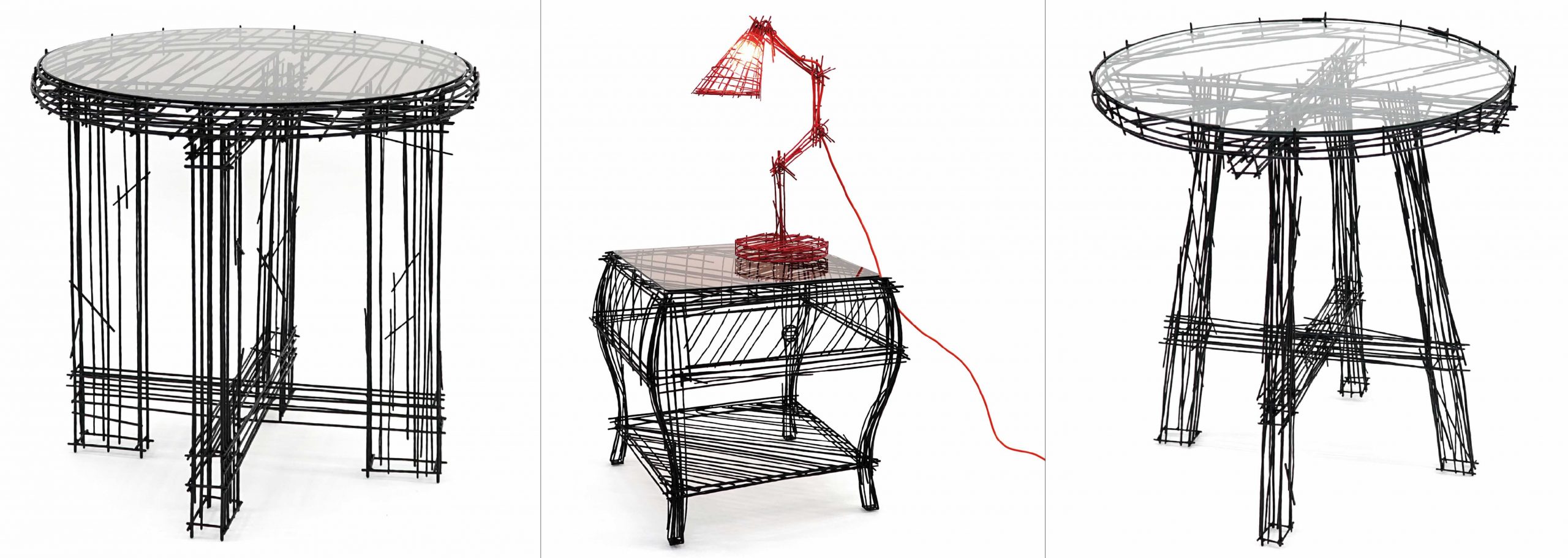
Drawing Series Table
What does art mean to you?
To me, art is a form of translation—an effort to capture a fleeting idea or emotion and give it a physical presence. It’s about preserving something raw and personal while making it accessible and shareable. My work exists between design and art, function and expression. I don’t see those categories as separate; instead, I try to blur the boundaries between them.
Art also means honesty. It allows me to show things that can’t be expressed through words—my frustrations, inspirations, questions, and discoveries. In that way, art becomes not just a product, but a process of understanding myself and the world around me.
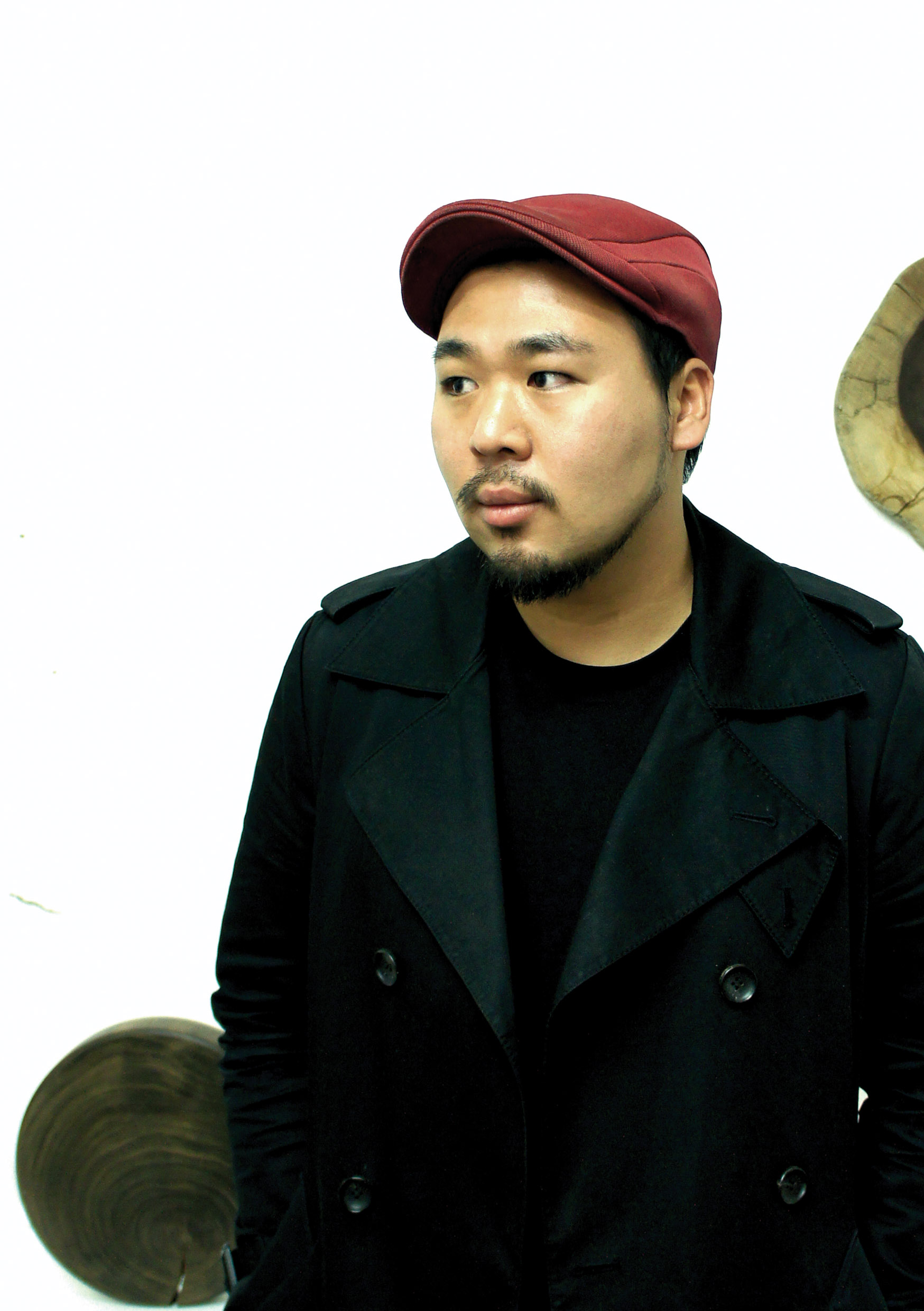
Portrait Jinil Park