
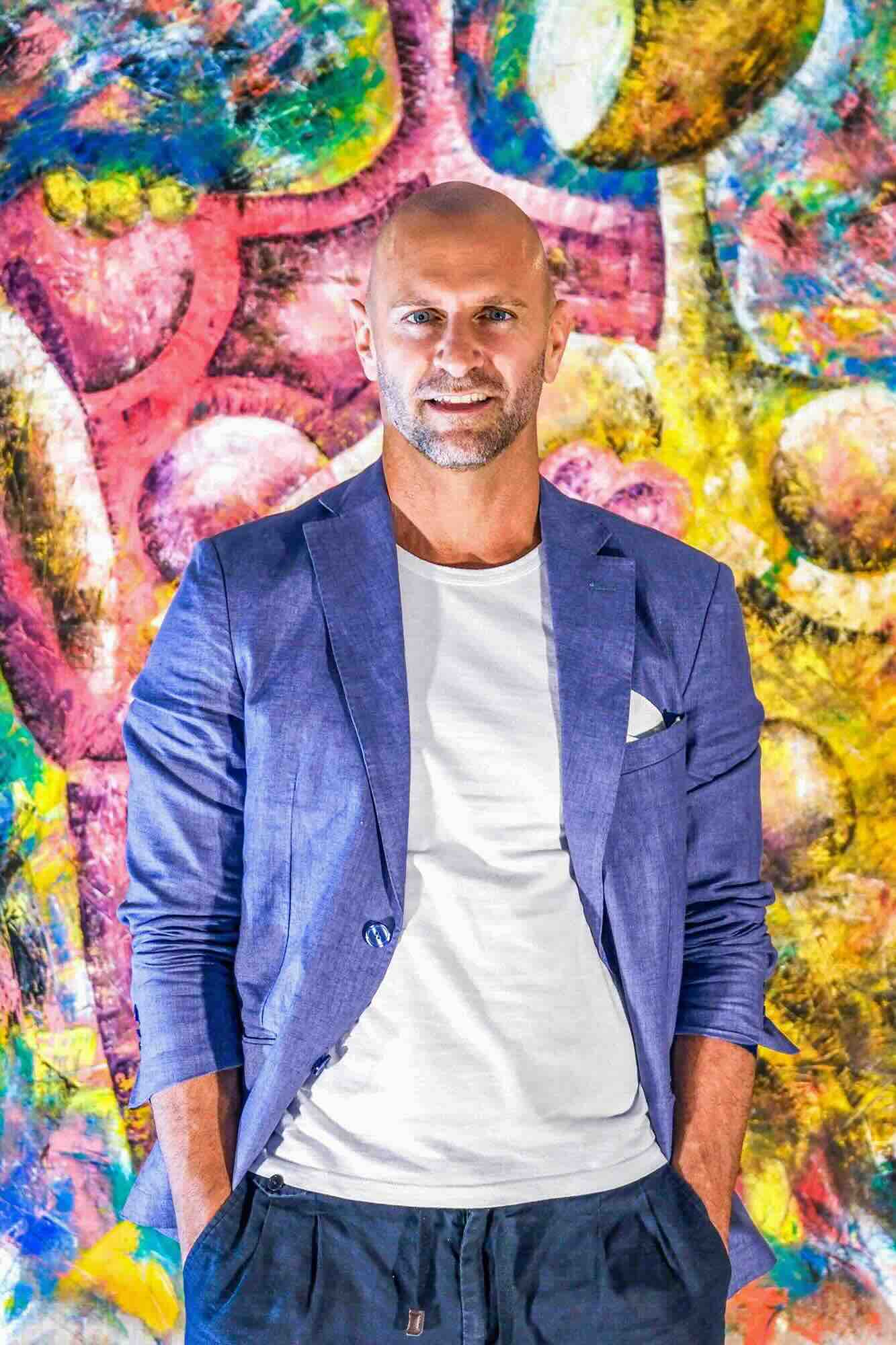
Cesare Catania (b. 1979) is an Italian contemporary artist, painter, sculptor, and director of movies whose career moves fluidly between disciplines, scales, and technologies. Often described as “a poly-instrumentalist of figuration, a machine in constant evolution”, he is recognized internationally as a visionary and a precursor, an artist who has always anticipated the times. When everyone was working exclusively in the physical realm, Catania was already experimenting with digital art. When the art world shifted to digital, he was already conceiving the phygital. And when phygital became a trend, he had already begun exploring the potential of artificial intelligence. His work does not simply reflect trends—it precedes them.
Over the years, Catania has participated in countless exhibitions worldwide, presenting his work in galleries, museums, cultural institutions, and public spaces around the World. His exhibitions, both solo and collective, have showcased the breadth of his artistic vocabulary—from intimate paintings to monumental sculptures and groundbreaking digital experiences.
In 2024, Catania represented a national pavilion at the Venice Biennale, a milestone that confirmed his international standing. That same year, he released his short film “The Imagination of a Child”, which has since been selected by more than 150 international film festivals, winning over 50 awards worldwide. The film, like his visual art, is a hymn to creativity as both memory and prophecy, capturing the power of imagination as a tool of transformation.
One of the most emblematic aspects of his practice is the Embrace Project. Born from the simple yet revolutionary gesture of a hug, it has evolved into a global cultural initiative about inclusion and human connection. In recognition of this, Cesare Catania was appointed the only official Ambassador in the World for the National Hugging Day 2023—an acknowledgment that underlines his belief in art not just as creation, but as a means to communicate, to unite, and to do good.
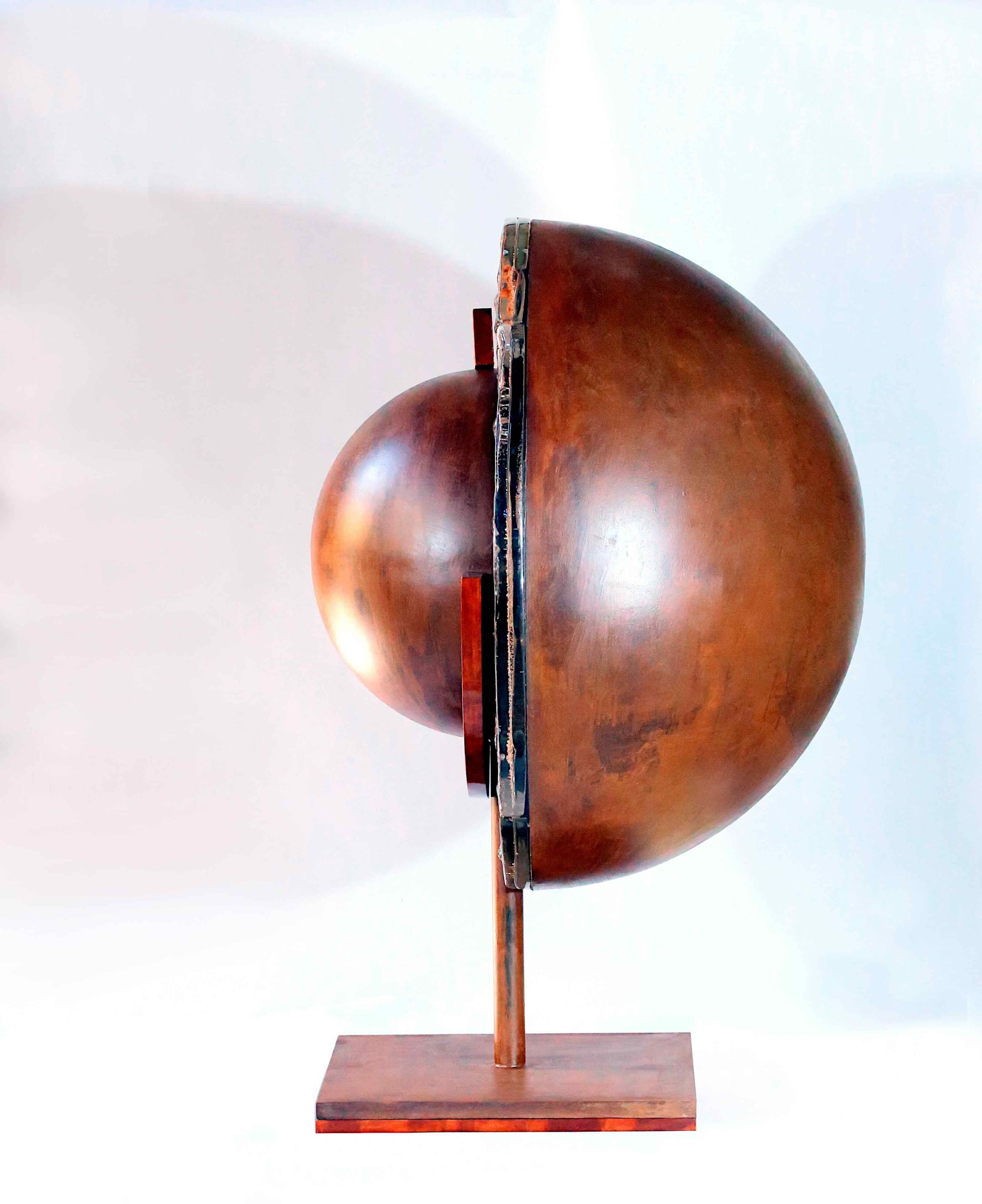
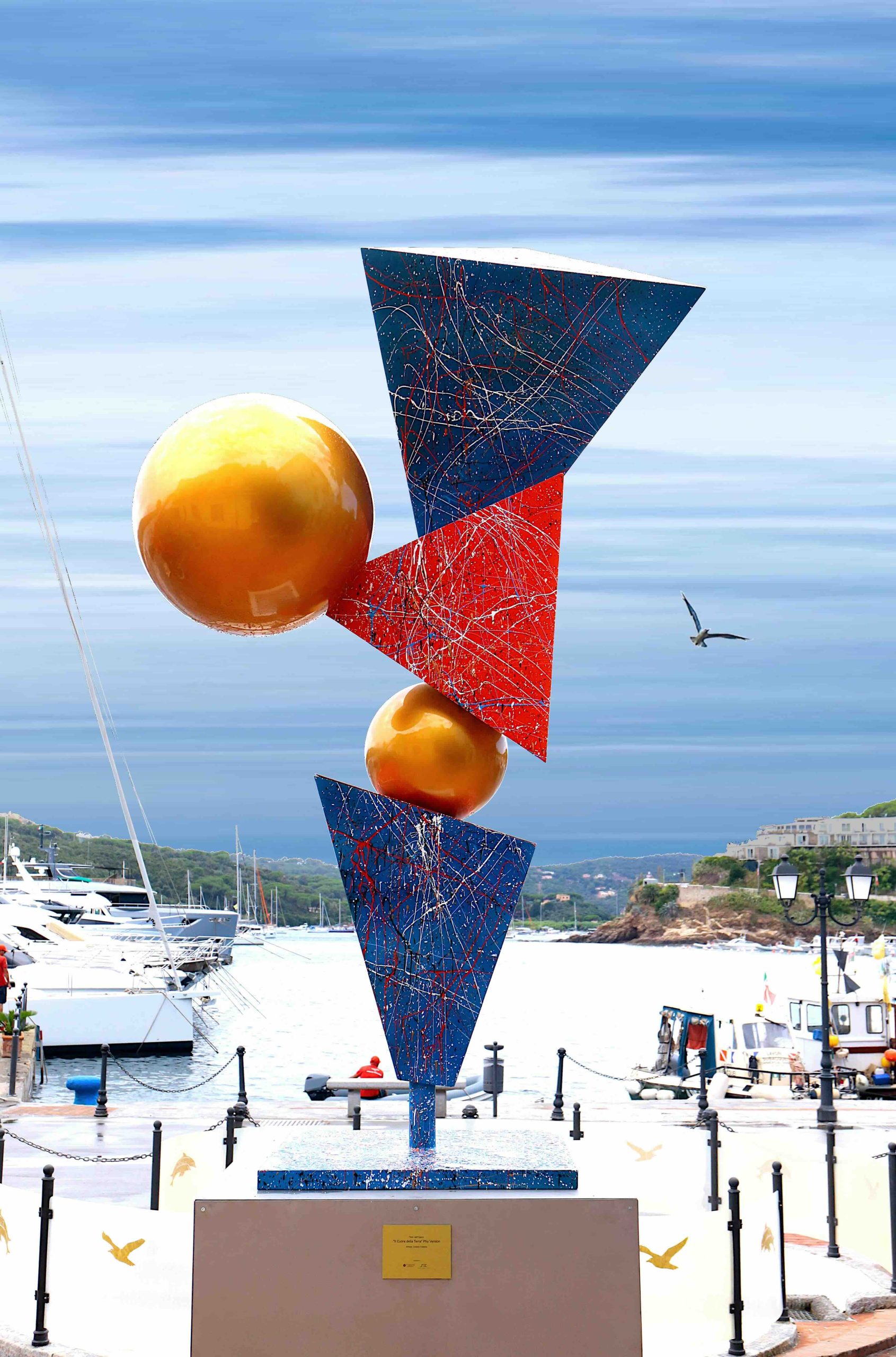
Catania’s monumental series “The Heart of the Earth” embodies these principles. Balancing spheres and pyramids in fragile harmony, the sculptures are designed not only as aesthetic presences but also as public symbols of balance, resilience, and universal belonging. Installed in cities such as Livorno and Marina di Pietrasanta, these works exemplify his vision of democratic art: art that is accessible to everyone, encountered in public spaces, resonating with children, passersby, and art experts alike.
Innovation is at the core of his practice. Catania is one of the pioneers of phygital art, integrating augmented reality and digital experiences into his sculptures to create layered narratives that bridge the tangible and the virtual. His Manifesto of Democratic Art, one of the first official manifestos in history written in such a form, defines art as inclusion, accessibility, and dialogue. For him, art is not the end goal but a means to communicate, to inspire, and to serve the community.
Beyond the monumental and the digital, his paintings and smaller works reveal a more intimate side of his vision. Using unconventional materials such as silicone, resins, steel, and pigments, his canvases and reliefs embody contrasts—fragility and strength, chaos and order, light and shadow—while always carrying a message. As Catania often says, his artworks are not simply observed; they are listened to, with the heart. Each one is a message in itself, a fragment of a broader dialogue between matter and spirit, artist and spectator, present and future.
Today, Cesare Catania continues to expand internationally, supported by institutions and private collaborations. His projects challenge conventions while remaining profoundly human. More than an artist, he is a cultural voice, an innovator, and above all, a storyteller who believes that art—whether physical, digital, or phygital—remains the most powerful tool we have to connect with one another.
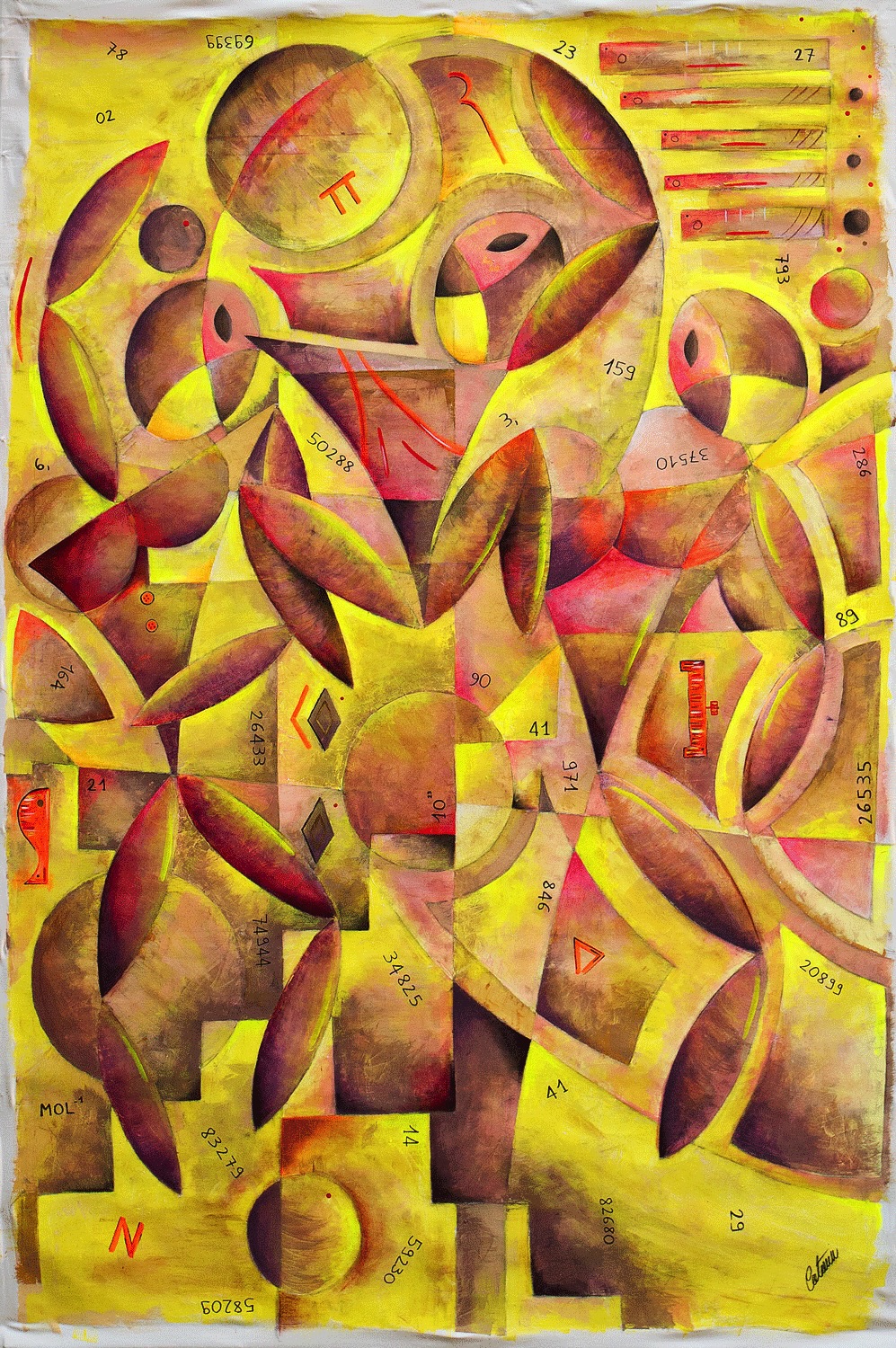
- What are the biggest challenges you have met in your career?
The greatest challenges in my career have always been tied to the very nature of my work: I have chosen to walk on a path where art is not a single discipline but a crossroads. Painting, sculpture, digital art, cinema, and monumental public installations—each of these worlds demands different skills, different energies, and different ways of thinking. The challenge has been to harmonize them without losing coherence, to make sure that each piece of my journey speaks the same language while using very different alphabets.
A recurring challenge has been scale. I often move from the intimacy of a canvas or a drawing to the immensity of a sculpture several meters high. The transition is never automatic: what works on a small scale does not always work on a monumental level. Designing a sculpture like The Heart of the Earth, more than four meters tall and conceived for outdoor environments, requires balancing poetry with engineering, vision with structural stability. In those moments, the challenge is to preserve the lightness of an idea while giving it the weight of reality—quite literally.
Another major challenge has been embracing innovation while staying true to the essence of art. The arrival of digital tools, augmented reality, and phygital experiences opened extraordinary opportunities, but they also demanded a new way of thinking. How do you create something that is at once physical and digital, timeless and technological? The difficulty was not just technical but philosophical: ensuring that technology is never a gimmick, but rather a genuine extension of meaning. This is a delicate balance, and reaching it has required years of research and experimentation.
There is also a more personal and human challenge: the ability to remain authentic and resilient in the face of uncertainty. An artist’s path is rarely linear. There are moments of silence, when ideas seem distant, and there are moments of rejection, when projects don’t find immediate acceptance. Learning to transform those pauses into opportunities, those obstacles into new directions, has been one of the greatest lessons of my journey.
Finally, a challenge I have embraced with conviction is the responsibility of creating public art. When you place a monumental sculpture in an open space, it no longer belongs only to you—it belongs to everyone. The challenge is to speak to a diverse audience, to design something that can resonate equally with a child, a passerby, or an art critic. It means creating works that are not only safe and structurally solid but also capable of becoming landmarks of collective imagination.
In summary, the biggest challenges of my career are the ones that keep pushing me beyond my comfort zone: moving between scales, blending tradition and innovation, turning difficulties into bridges. But it is precisely in these challenges that I find the strength to evolve. Without them, art would not be a journey—it would be a static object.
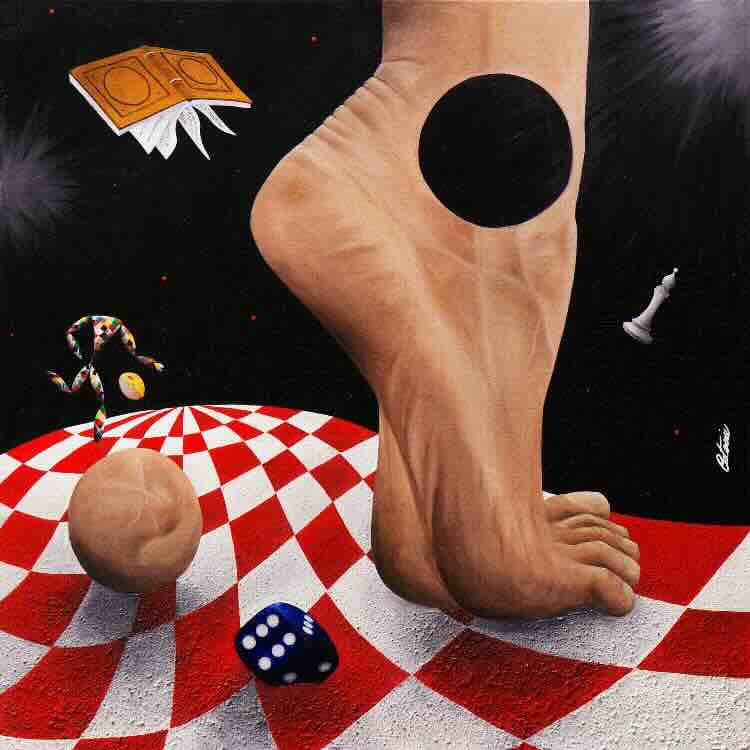
- How was your passion for art born?
My passion for art was not born suddenly—it is something that has always been part of me, like a second skin. Since childhood, I have felt the need to translate what I observed, what I felt, into forms and colors. I still remember how, as a child, I would draw obsessively, trying to capture not just the appearance of objects but their essence. That imaginative instinct gradually became the lens through which I interpreted reality.
However, my passion did not develop only through instinct. Growing up in an environment where mathematics, engineering, and architecture were also valued, I learned to merge intuition with calculation, creativity with structure. Art for me has never been a decorative act, but a language that must be as rigorous as it is expressive. This duality—emotion and logic, dream and mathematics—formed the basis of my artistic path.
Over the years, I realized that art was not simply a “choice” but a “necessity.” I could not stop creating. Every pause became an accumulation of energy, every silence a preparation for new work. My passion grew because it was nourished by life itself: by travels, encounters, failures, and rebirths.
One of the turning points was when I began working with unconventional materials such as silicone, resins, and steel. I discovered that every material has its own language, its resistance, its memory. By experimenting, I realized that art could also be a scientific exploration, and that my curiosity for the world could become an inexhaustible engine of creativity.
In this sense, my passion was born from the natural intertwining of instinct and reflection. It was born as a game, grew as a challenge, and today it has become my way of living and communicating with the world.
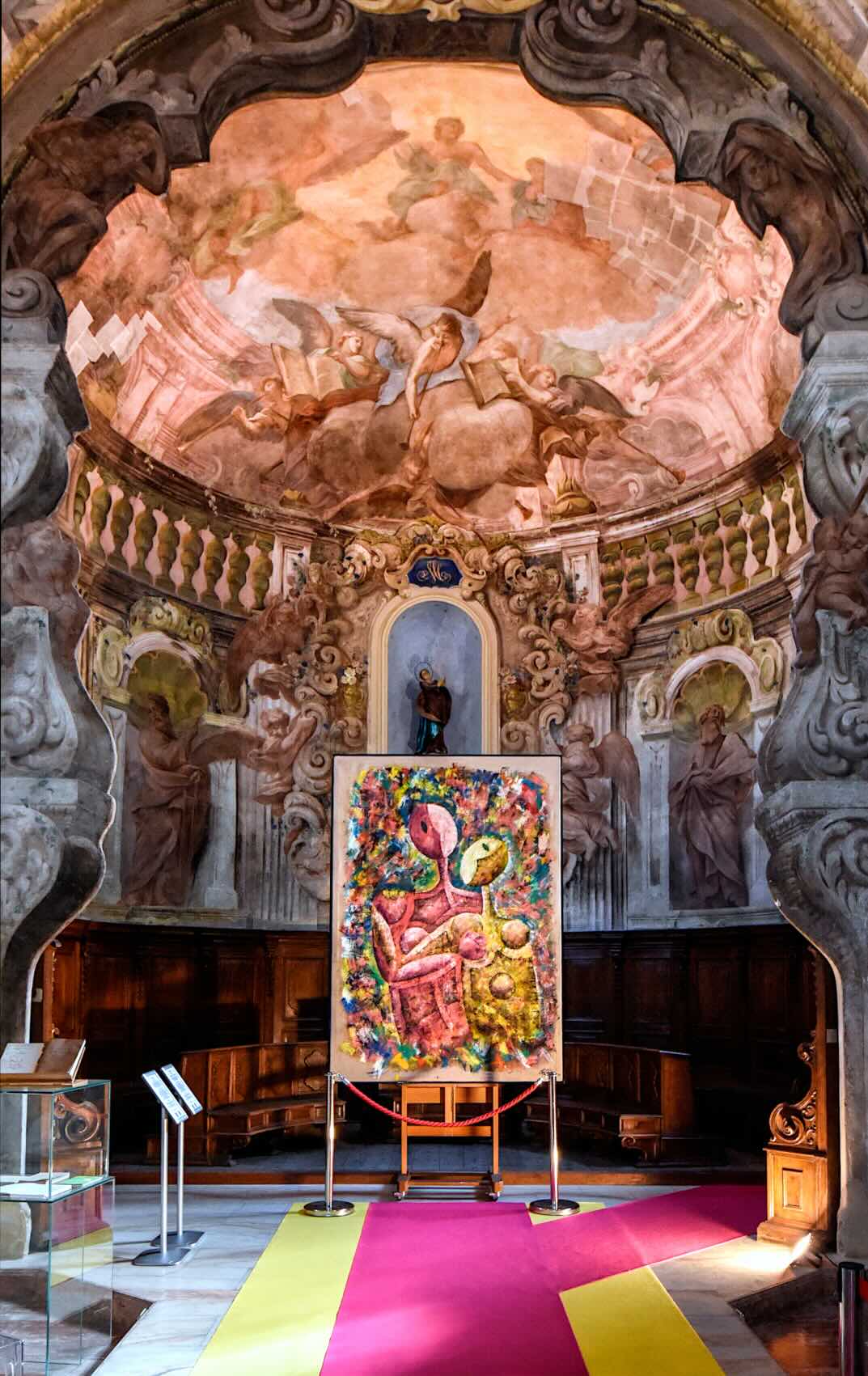
- What is your main source of inspiration?
Inspiration for me is never a single source—it is a constellation. The main axis, however, is always human emotion. I am fascinated by how feelings, fragile and invisible, can be translated into matter, into geometry, into light. The Embrace Project, for example, was born from a reflection on the simple yet revolutionary gesture of a hug—a gesture capable of healing divisions, of crossing barriers, of restoring humanity to our relationships.
Nature is another endless source of inspiration. The rhythms of the earth, the geometry of crystals, the instability of clouds, the silence of stones—all of this nourishes my artistic research. The Heart of the Earth series, monumental sculptures balancing spheres and pyramids, is a direct tribute to these forces: gravity, balance, fragility, and resistance.
Equally important is technology. I do not see it as an enemy of tradition but as its continuation. Digital art and augmented reality allow me to extend the life of my works, to create phygital experiences that speak to new generations. For me, inspiration comes from this dialogue between ancient archetypes and future visions.
Lastly, I find inspiration in contrasts: between logic and instinct, between stability and imbalance, between fullness and void. Art is born for me in those moments when opposites collide and generate a fragile, unstable equilibrium. That is where the spark lies, and that is what I try to capture every time I create.
- What does art mean to you?
Art, to me, is not a profession or an occupation—it is a way of existing. It is the lens through which I understand the world and the bridge through which I try to reach others. If I had to summarize it in one word, I would say that art is dialogue. Dialogue between matter and spirit, between artist and spectator, between present and future.
For me, art is memory and prophecy at the same time. Memory, because each work carries within it fragments of personal history, cultural archetypes, and collective experiences. Prophecy, because every creation looks beyond, anticipates, and suggests paths that society has not yet traveled.
Art also means responsibility. When you place a monumental sculpture in a public square, or when you release a film that speaks of imagination, you are not just expressing yourself—you are giving something to the community. You are offering an opportunity for reflection, for wonder, for pause in the midst of daily noise. For this reason, I believe that art is also a form of service: it does not belong only to those who create it, but to everyone who encounters it.
At the same time, art for me is freedom. It is the only space where opposites can coexist without conflict, where fragility becomes strength, where imperfection becomes beauty. In a world increasingly dominated by control and efficiency, art reminds us that mystery and instability are not weaknesses but essential parts of life.
In conclusion, art means breathing. Just as I cannot stop breathing, I cannot stop creating. It is not something I do—it is what I am.
Cesare Catania